Fowler’s February – Q&A

As February is Fowler’s Syndrome Awareness Month, I decided to find out what some common questions were that people have about Fowler’s, as well as asking others with the diagnosis what they wish they had asked when it was first brought up for them. One of the things I’ve been asked the most is ‘what is your fowlers story?’ but I’ve decided to leave this for a separate post for now as it’s pretty long!
What are the main symptoms and what were your initial symptoms?

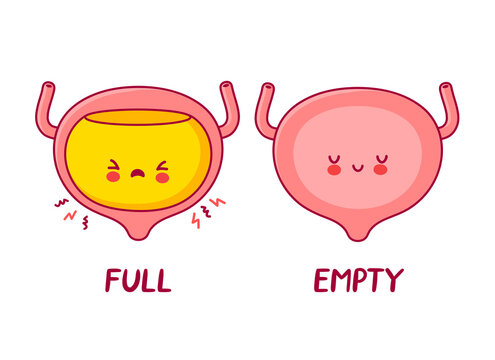
The main symptom is an inability to urinate – this can either be a partial inability or full inability. Sometimes people may have to strain to empty their bladder, or take a long time to fully empty their bladder. Bladder spasms can be a huge issue for people with the condition as well.

Often, people are unable to feel when their bladder is full. I rarely have bladder sensation unless I have an infection (which is when I often feel like I constantly need to go to the toilet).

Stomach, bladder and pelvic pain are common side effects of Fowler’s. Pain can increase with specific movements and activities. Frequent infections can also exacerbate pain levels. Infection is also common – this can be because having a catheter is something that can increase susceptibility to infection, or being unable to fully empty the bladder can also increase the risk.

My initial symptom was a kidney infection – it sent me in to full retention. When it was treated the symptoms appeared to resolve, though it’s likely that I was in partial retention. I then went back into full retention again, and so this, along with increased pelvic pain, were my initial symptoms.

How is it diagnosed?

Fowler’s Syndrome is a difficult condition to diagnose, but the gold standard test is a specialist one called ‘concentric needle electromyography’ (an EMG). Abnormal electrical activity on this test signifies Fowler’s. It’s a pretty uncomfortable test as a needle is used to record from the sphincter.

Other tests that can be carried out include looking at flow rate, residual bladder volume scanning, urethral pressure profile, and ultrasound sphincter volume. However, these tests depend on whether you pass urine naturally or not.

Urodynamics are often the first test that is given as it is commonly carried out in urology departments – if you are in full retention it is unlikely that there will be any useful results, although it can show whether or not your detrusor muscle (the main bladder muscle) is functioning at all.

How long did it take for you to get a diagnosis? Are there any common misdiagnoses?

I was incredibly lucky to get my diagnosis within 4 months of the initial onset of symptoms. On average it takes people seeing 8 professionals before diagnosis and it can take years before a solid treatment plan is given.

The most commonly given first diagnosis is Detrusor Failure (Acontractile Detrusor) as this is a diagnosis that can be given after urodynamics which is the go to test for urological problems. However, when the EMG is done this then highlights the problem with the sphincter muscle and allows the diagnosis of Fowler’s to be given.

When it was first mentioned to you as a diagnosis/given as a preliminary diagnosis how did that make you feel?

In all honesty, I didn’t know what to think. I’d never heard of Fowler’s so it was a lot to get my head around. I didn’t know what to expect, I thought I’d need a catheter for a matter of weeks or months, and certainly didn’t expect to still have one 6 years later! But it was also a relief. No one was telling me that I was making it up or that they didn’t know why my symptoms had started, they could say ‘we might not know a lot, but we do know this’ and that felt reassuring at a time when I didn’t know what to expect next.

What treatments are there? What have you tried in the past? Are there any treatment options you hope to try in the future?

There isn’t a cure for Fowler’s but there are treatments that can be tried. Treatments are still being researched and developed.

The one that a lot of Fowler’s patients try is Sacral Nerve Stimulation – this is particularly good for patients who are in full retention. Those in partial retention may benefit, but their symptoms are more likely to respond to self-catheterisation in order to fully empty the bladder. SNS is the only treatment that has been shown to restore voiding in patients who are otherwise in full retention. In short, SNS is like having a pacemaker for your bladder – it sends electrical signals to your sacral nerves (the nerves that control the bladder). You usually have a trial first to see if it is effective enough and if it is then the full device is implanted.

A Suprapubic Catheter (SPC) is a surgical catheter that is inserted into the bladder through your lower abdomen. This can be better for those with Fowler’s as they bypass the urethra and so there are often fewer urethral spasms when a SPC is in situ rather than a urethral catheter.

Bladder botox has been used for years for people with overactive bladders. It has been used for Fowler’s patients and has shown improvements in bladder emptying for some, as well as reducing bothersome symptoms like spasms and pain. The botox is injected directly into the sphincter and is usually effective for between 3-9 months.

There are two more drastic options as well:

Mitrofanoff surgery is a form of urinary diversion. The purpose of this is to form a man-made channel between the bladder and abdominal wall to allow intermittent self-catheterisation through the abdomen rather than urethrally. Often, it is made using the appendix, but when this isn’t possible part of either the small or large bowel can be used. This option means that you don’t need to have a catheter permanently in place or be attached to a bag.

A Urostomy is a type of stoma and is another form of urinary diversion. A small section of bowel is used to form the stoma and this is connected to the ureters (the tubes that are connected to the kidneys). You then have a stoma bag that collects the urine and needs to be emptied throughout the day and changed regularly.

Both of these are options that are seen as a last resort due to the complexity of them and the recovery time that is needed.

I currently have a SPC (I’ve had it for 4 years now!) and have tried SNS but was told the trial wasn’t effective enough. I’m currently waiting to see if I can have another trial through pain management as it was very effective for my pain levels, and I should find out about this at the end of the month. I’ve been told by one consultant that Mitrofanoff or Urostomy surgery is my only option now, but this isn’t something that has been discussed further.

What is one thing you wish people knew about Fowler’s Syndrome?

That it is so much more than not being able to pee! It’s infections, sepsis, pain, leaking catheters, blood, more pain, spasms, medications, repeat hospital appointments, lack of understanding from professionals and those around you. It causes fatigue and can completely turn your life on its head. It’s a lot.

What is the hardest part about having Fowler’s Syndrome?

For me, it’s the catheter. I have very specific reasons why this is difficult – I have C-PTSD and my catheter is a huge trigger for me and so I find it incredibly hard to live with a catheter that causes such difficult emotions and thoughts to come up. I find catheter changes incredibly difficult because of this and it made self-catheterising near on impossible for me.

Have you had any positive experiences with medical professionals about it, and if so, how has that impacted you?

I have! My first urology nurse was incredible. She was very empathetic and understanding, and I really felt listened to by her. She is actually the reason I started sharing my journey more openly. I had spoken to her about how I felt like I must be the only person in the world my age to be experiencing symptoms like I was, and she sat me down and told me that it was so much more common than people thought. She said she’d love there to be a young urology ‘poster-girl’ (as most leaflets I got given featured pictures of old people on them) and it was after that appointment that I decided to open up more and raise as much awareness as possible.

I’ve also been really lucky to have some incredibly district nurses coming out to me for catheter changes. They’ve held my hand, reassured me when I’ve had flashbacks, stayed at my flat for far longer than they should in order to make sure that I’m ok after a change. They’ve had cups of tea with me and listened to me play the piano, told me about their lives – treated me like a human and not a number. They’ve let me get to know them as much as possible so that I really feel like I have trusted relationships with them, which due to past trauma is something that means a huge amount for me.

If you could change just one aspect of Fowler’s Syndrome, what would it be?

The pain. Definitely the pain. I think I could come to terms with the catheter if I didn’t have to put up with such debilitating pain and spasms.

If you could speak to med students, what is the most important thing you would want them to take away from the conversation?

I actually spoke to some med students about Fowler’s last year! I was an inpatient on a psych ward (so I doubt they were expecting me to start talking urology at them) and they asked if they could have a chat with me and listen to my story. I told them that if there was one thing I wanted them to take from our discussion it was to remember what Fowler’s Syndrome is and to share it with fellow med students and lecturers. I appreciate that it is a rare condition, but it has such wide reaching effects and it still deserves attention and awareness.

If anyone ever has any questions about Fowler’s Syndrome or bladder health in general, I’m always open to answering anything you want to know about!

All my love,

Anna x
Loneliness in Chronic Illness

Living with chronic illness is a journey that is full of challenges – physical, emotional, social – you name it, it can be a challenge. Among these, loneliness is something that is incredibly common but is also underestimated by a lot of people. Chronic illness fundamentally reshapes your entire life – activities that one brought you joy may no longer be possible due to pain or fatigue, friends and family may struggle to understand your limitations which also leaves you vulnerable to feelings of loneliness.

Social events often require energy and effort that a lot of people with chronic illness are unable to participate in. Spoon theory is a good way to describe the energy limitations that are imposed on someone with a chronic health condition, and often we simply lack the ‘spoons’ needed. This can lead to feelings of isolation as being around friends and family is how we feel connected and is something that people need – we use solitary confinement in prisons as a punishment because it removes that connection that all humans need.

As well as this, when people misunderstand our illness or limits that we have, it can lead to a lack of empathy or patience. It’s understandable that, unless you’ve got a chronic health condition yourself, you can’t fully comprehend what life is like. And as chronic illnesses are so unique and symptoms vary drastically from person to person there can be misunderstanding between individuals with the same condition. It often feels like no one understands what life can be like, and this is a lonely place to be!

Loneliness doesn’t just stem from chronic illness either – it can actually worsen it. Social isolation can exacerbate feelings of depression, anxiety, and hopelessness, which can, in turn, amplify physical symptoms. It can feel like a never-ending cycle that is impossible to break.

But despite the loneliness that you may feel, there are other ways to connect with people. I have found communities online that have allowed me to connect with and speak to other people with chronic illness who understand what life can be like. For me, social media is my connection to the outside world – if I didn’t have access to it then life would feel even more isolating for me. I sometimes take breaks from social media as it can feel overwhelming at times, but I do miss the sense of community and understanding when I am away from those groups.

If you know someone who is living with a chronic illness, remember that your understanding and patience can make all the difference. Reach out, listen without judgement, and offer support in whatever way your loved one needs. Offer to pop round for a cup of tea or to go to drop off some shopping. Ask if they want to chat on the phone or over facetime. Find out if they need help with jobs around the house and offer to go over and help them get some bits done. Whatever is needed at the time – knowing that they have people who love and care about them will undoubtedly make the person struggling with chronic illness feel valued and connected to you!

All my love,

Anna x

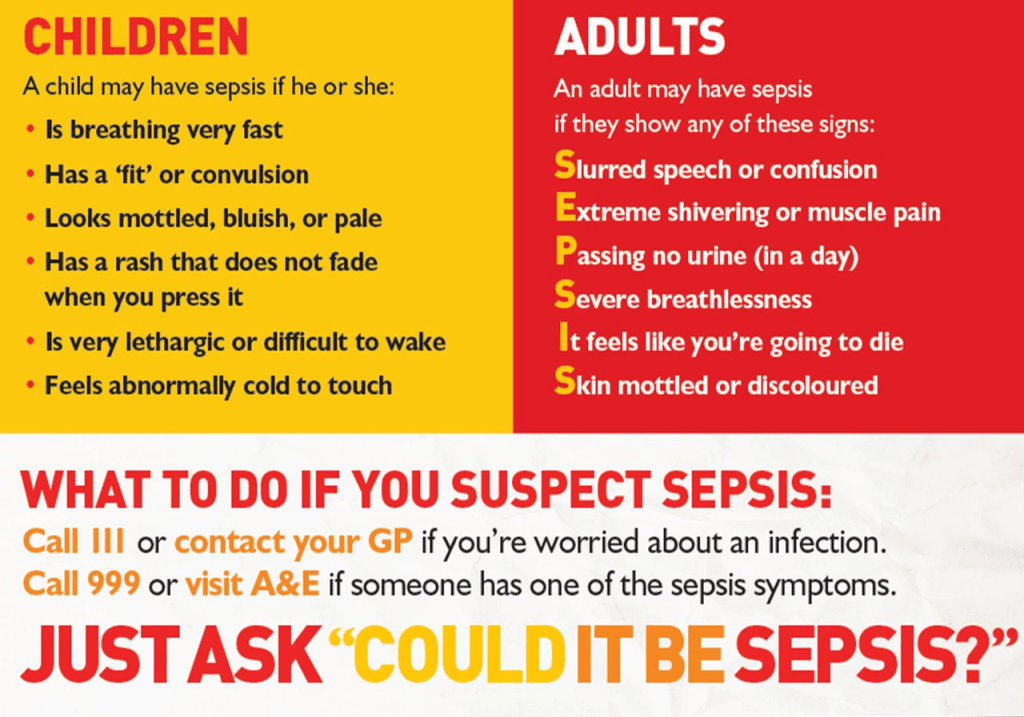
Ella’s Sepsis Story

If there’s one thing you read in its entirety today, please let it be this.

It been 2 year ago now since I knocked on death’s door! I went from being at a farm swap one day, to dying the next. It wasn’t a rare medical condition that brought me from being a healthy woman to a dying one either. It just hit hard, it hit fast and it would turn my life upside down.

In August of 2022 I had sepsis. And then in October of 2023 it came back. The goal of 2024 is to not get sepsis!

Before I had sepsis, I knew that sepsis was your body’s reaction to infection. I just thought old people got it or those with poor health. I didn’t know people like me(or that even my children) could get it so quickly and I didn’t know that sepsis had long term health affects. I was pretty uneducated about what sepsis was.

And so it’s become important to me to share what sepsis is, to tell you how to recognize signs of it and to tell you what post-sepsis syndrome is, in hopes that if you are sick you don’t wait to seek medical attention.

Sepsis is the body’s extreme response to an infection. If you don’t get treatment for it, it can lead to organ failure, tissue damage and death.

Symptoms of sepsis are not specific. They can vary from person to person. Initially my blood pressure was low and I had change in mental clarity… my mental state was the most drastic actually. So much so that the hospital ER staff believed I was high on narcotics and was treating me as such. It wasn’t until the hospital made contact with my husband and my best friend arrived at the ER that they were able to ensure the hospital I wasn’t a drug addict and that something else was wrong. And it was! I was finally given a urine drug screen and passed, but the long wait in the ER and being treated as just another addict had delayed much needed treatment and my sepsis turned into septic shock. My best friend saved my life that day.

I spiraled quickly… my blood pressure was low, my respiratory rates were high, I had a fever, I was hallucinating, I was shivering, I lost control of my bladder functions, I felt nauseous. I felt absolutely horrible.

Having sepsis led to my long admittance to the hospital. If I had stayed home, I wouldn’t have made it. If the hospital had delayed longer, I wouldn’t have made it. When people don’t get treatment, sepsis is a leading cause of death. Sepsis ranks higher than breast cancer, lung cancer, and heart attacks. It’s serious stuff. Sepsis can kill an affected person in as little as 12 hours and now that I’ve “been there, done that”, I can testify that this is absolutely true. I was feeling pretty deathly pretty rapidly.

Sepsis is treated with a strict antibiotic regimen. The underlying cause of sepsis or the original infection isn’t always known. It wasn’t ever clearly determined what caused me to get sick. They just have theories.

When I was discharged from the hospital I left knowing I’d be out of work for a bit, taking time to feel better, get rested, etc. But as the days grew to weeks, I wasn’t getting better. I found myself lost(literally), easily confused, at a loss for words, extremely tired, and unable to do tasks I once could. I would wake up and be disoriented to where I was. I’d sit in the house and not know what I was supposed to be doing. I’d try to do simple tasks like pickup dinner at the store and then completely forget why I was there. I would see people and they would act like we knew each other but I had no memory of them. Jason would tell me who they were but it’s like they never existed. I’d relearn people, names, and events. I would later find out that I had post-sepsis syndrome.

Post-sepsis syndrome affects 50% of sepsis survivors. Symptoms vary from psychological to physical effects. My short term memory was heavily impacted as was my cognitive functioning, similar to that of a traumatic brain injury. I had extreme fatigue and chest pains. My once normal heart now had tachycardia.

Post sepsis has required me to take medications just to stay awake during the day and to stimulate my brain. It’s changed my heart functioning and I take medications to keep it beating the right way. It’s made me forget some moments I desperately want to remember. It’s made simple memory tasks into harder ones. It’s made me rely on others to help do tasks I once could easily do. It’s enrolled me in rehab where we practiced skills to help my injured brain.

Now I do things on my speed and with tons of support from my husband and kids.

If you say “wow! I didn’t know!” It’s because I have the best support system someone could ask for. You don’t see me fail because of them. I succeed because they are behind me filling in the gaps.

I don’t share this because I want prayers or good vibes. I don’t want sympathy. On my two year almost dying anniversary, I want you to take sepsis seriously. Very seriously. I want you to go the doctor when you have an infection. I want you to take 5 mins today and to Google sepsis and read about all the signs and symptoms of sepsis.

I want you to be healthy. ❤️

April’s Sepsis Story

I had a brainwave a couple of days ago and thought it would be really good to share as many stories of sepsis as possible on this platform. I might not have the widest reach in the world, but I have had people reading from across the world and sepsis is so serious that to me, it feels like a no-brainer. Awareness saves lives. I just want to thank every person who has agreed to share their story with me as it takes a lot to put yourself out there. Over the next couple of weeks I’ll be sharing various stories – please read and show some support to these amazing humans for wanting their story out there to hopefully help others!

On Saturday, September 2, 2017, I delivered a healthy baby boy and I was the happiest woman on earth. My husband and I had prayed for this child for years and this was going to be the start of our new adventure. What I did not know then was that this adventure was going to have a very rough start, one that still leaves me with nightmares.

On the day I was supposed to be discharged from the hospital I began to feel sick. I began to experience fever, chills, overall feeling of weakness, became short of breath, and felt like my heart was racing. I told my doctors all of my symptoms, but was quickly brushed off and was told that I was likely “just anxious about being a new mother.” Some tests were run and my White Blood Cell (WBC) count was higher than the previous tests, but again I was brushed off and told, “An elevated WBC count is normal after child birth.” When I was shivering from my fever, I was told to take a hot shower and one doctor even turned the thermostat in my room up to 80 degrees to stop the shivering. When my fever turned to sweats a nurse brought me a fan, again I was not taken seriously. Over the next few days I would continue to complain to doctors, but I continued to be ignored. One doctor even told me I was being “crazy” and needed to “stop”.

After doctors had given me enough Ibuprofen to make my fever go away for a while, they told me my new mom anxieties would likely go away when I got home and they sent me home with a prescription for anxiety medication. Not being a medical professional, or knowing what an elevated heart rate, fever, and elevated white blood cell count meant, I naively believed the doctors, that I would feel better once I got home.

Upon going home my symptoms did not improve. I continued to take the prescribed medications, including the anxiety medication prescribed by the doctor. My heart continued to race and I could not sleep or care for my newborn baby. Within about 36 hours of being released from the hospital, I couldn’t take it anymore and returned to the hospital first thing 9/08/17. On the way to the hospital I told my mother about the doctor telling me I was “acting crazy”, and was second guessing going back for fear that I would be told the same thing and sent home again. I am thankful my mom kept driving and insisted I get checked out. After a short stay in triage I was admitted into the hospital due to suspicions of an infection. Over the next 24 hours in Labor and Delivery my condition did not improve, I got progressively sicker and sicker as each hour passed. I went to the hospital to get better, instead I laid there getting worse. The OBGYN doctors had no real answers for my family. In the early morning hours of 9/09/17, I was finally taken to the ICU by a nurse from a different department who looked at my labs and knew something was extremely wrong. Had he not taken quick action, there is no doubt I would not have survived another 24 hours in the Labor and Delivery unit.

Over the next 2 weeks I would be treated for sepsis, endomitritis, septic shock, and all the other issues that go along with those, I.E.. kidney failure, shock liver, unstable blood pressure, pulmonary edema,  blood clots, and the list goes on. I don’t remember much from my 9 days in the ICU and my earliest memories of waking up from my medically induced coma are filled with nothing but confusion. Where was my son? Did I even have a baby? Was that a dream? Whose hand did I trace the letters “C-R-U-Z” in to when I had a tube in down my throat?

I would later learn that was my mother’s hand that I traced my son’s name in to and that was one of the very first things I did when I woke up. As I started to become more aware my family and doctors carefully tried to explain to me that I had developed an infection of an unknown source. That was the very first time that I had ever heard the word, “sepsis.”  At the time, I had no idea what septic shock even meant. I was very confused. I had no idea that I had literally just escaped death. I had no idea that during my time in ICU the doctors told my family to call those closest to me to say their goodbyes.  I had no idea that my husband had to think about how he was going to raise his son without a mother. I had no idea that my son came so close to growing up without his mama. I had no idea what I had survived had killed so many others.

My husband recently visited another hospital in our area and noticed several posters about the symptoms of sepsis and we all talk about how if we had seen that information what might have been different. I constantly find myself saying, “I wish I had known about sepsis.”

Although my story of being a new mom got off to a rough start, today I am a happy, healthy, mama to a silly, smart, and sometimes a bit of a wild child boy. On the days when I get upset about missing out on the first month of dirty diapers, midnight feedings, and sweet baby cuddles I am reminded that not all who experience sepsis are as lucky as me. Now more than ever, I hear stories about people who have lost limbs, had severe long-term problems, and even died from sepsis.  Throughout my one month stay in the hospital I constantly heard from medical professionals how “rare” sepsis is, but as I have done more research I am realizing sepsis really isn’t rare at all.

As I continue to share my story  I find people just don’t know what sepsis is. I try to stress to everyone that while my sepsis experience was related to child birth, sepsis can affect anyone from something as small as a cut on your finger.

My goal in sharing my story is to help educate others about the symptoms of sepsis and the importance of advocating for your own health or the health of those around you.  Because sepsis can affect anyone I want to help raise awareness across all audiences, but my experience has led me to have a special place in my heart for mothers-to-be. I  I hope that more OBGYN teams will educate themselves on sepsis so that no family has to go through what mine did and even more so, I hope that pregnant women learn the symptoms and stand their ground if they feel that something is not right.

My Sepsis Story

In January this year I had sepsis and it was the most terrifying experience of my life. It wasn’t the first time I’ve had it but it was the worst. As people with Fowler’s Syndrome are at higher risk of infections due to catheters, it follows that we are also at higher risk of developing sepsis. I’m really fortunate that because I was already in hospital at the time, it was caught early because things could have been much worse.

On New Years Eve I started to feel incredibly unwell. At first I thought it might just be the start of a migraine because I’m often sick and more exhausted than normal when I feel one coming on. But when the nurse in my bay came to do my observations I could tell something was seriously wrong. She immediately went to call a doctor and within 5 minutes my bed was surrounded.

My blood pressure had absolutely tanked (my notes, which I later read, said that it was 61/30), my temperature was 41°c and despite being in bed my heart rate was 149bpm. My score on the National Early Warning Signs system was 12. They took bloods straight away, including blood cultures, and put me on continuous fluids. And when they looked at what my lactate level was they knew that they were probably dealing with septic shock. A normal blood lactate level is less than 2.0mmol/L (some sources say that it’s less than 1.0mmol/L) and mine had jumped to 23. My entire body felt like it was on fire and I was beginning to feel quite disorientated.

Whilst they waited for my blood cultures to come back I was put on 3 different IV antibiotics until they knew what one was most appropriate. The critical care outreach team came to see me and discussions were had about whether or not I needed to be moved to intensive care. I wasn’t tolerating my feed at all so it had to be stopped for a few days, and when I woke up on New Years Day, I had the worst headache I’ve ever experienced. If I thought the headache that was starting the day before was bad, it was nothing in comparison to this.

I genuinely felt like my head was going to explode. I couldn’t move at all – I couldn’t sit up, turn from side to side, and the bright hospital lights just made everything worse. This made the medics suspect that I might have meningitis, but once my blood cultures came back, they realised that it was ‘just’ being in septic shock. I’m pretty glad that I didn’t have to have a lumbar puncture – I was hours away from that being carried out.

The continuous IV fluids were carried on until my blood pressure had stabilised a little – it took 4 days before it was normal enough that I was allowed to stand up and walk to the toilet (that was about 5 steps in front of my bed), and the same before my temperature dropped below 40°C. The critical care outreach team came to see me 4-6 times a day whilst my NEWS was still so high.

I don’t think I’ve ever felt so unwell in my life. All I asked the doctors for the first few days was ‘am I going to die?’ because I really did feel like that was the likely outcome. And now, being a science nerd who likes to read research papers for fun, it’s made things even clearer in terms of how unwell I was. In all honesty, the severity of my symptoms was probably also, in part, due to malnutrition and having experienced refeeding syndrome the week prior to going into septic shock. My body was struggling a lot.

It took a good 4 weeks before I started to feel semi-human again (although I still wasn’t at my baseline) and what did my body reward me with? Sepsis take two. I wasn’t quite as unwell the second time around, which I’m very grateful for, but it’s still taken it out of me. I’m still not back at baseline, even 6 months later, and I’m anticipating a long road ahead of me, but I know I’m incredibly lucky to be in the position I am, because things could have been very different.

All my love,

Anna x