
When I was diagnosed as autistic, I started to read (probably a little obsessively) up on the condition. I wanted to know everything and anything about it, and read about other people’s experiences as well. Here are some of my top books that I have come across!

To the outside world, Emily looks like a typical girl, with a normal family, living an ordinary life. But inside, Emily does not feel typical, and the older she gets, the more she realises that she is different. As she finally discovers when she is 16, Emily is autistic. Girl Unmasked is the extraordinary story of how she got there – and how she very nearly didn’t.
In this simple but powerful memoir, we see how family and friends became her lifeline and how, post-diagnosis, Emily came to understand her authentic self and begin to turn her life around, eventually becoming a mental health nurse with a desire to help others where she herself had once been failed.
Ultimately uplifting, Girl Unmasked is a remarkable insight into what it can be like to be autistic – and shows us that through understanding and embracing difference we can all find ways to thrive.
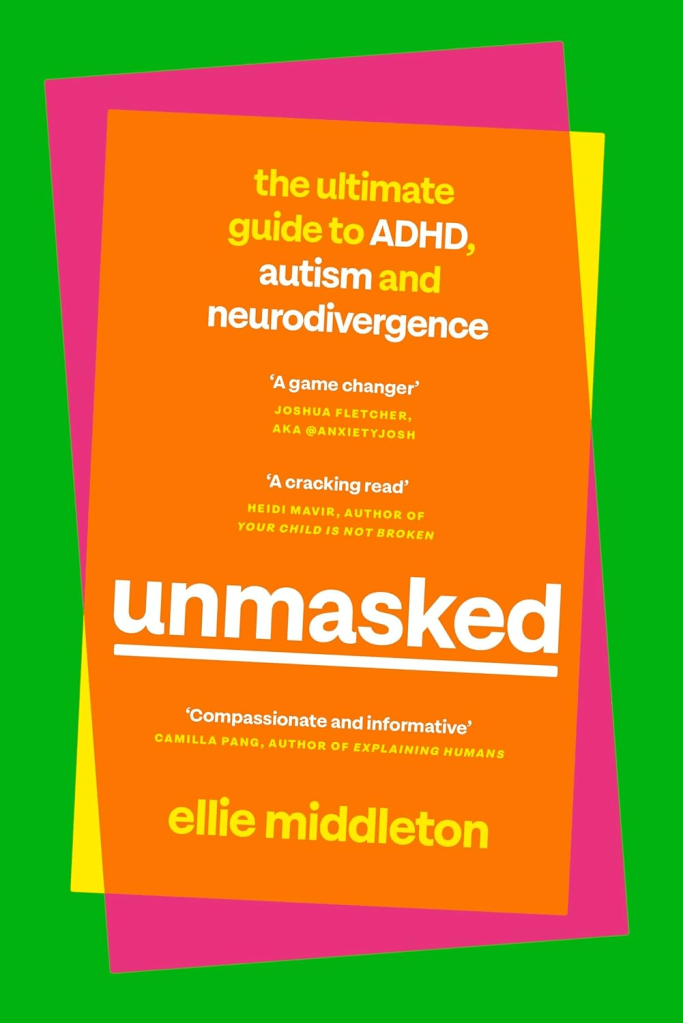
In 2021 Ellie was diagnosed with autism and ADHD and although it felt like the light had finally been switched on and she wasn’t just ‘broken’, the room before her was messy from a lifetime of being misunderstood. She quickly found that she wasn’t the only one, in fact 80% of autistic females remain undiagnosed at age 18 and only 8% of adults affected by ADHD have a formal diagnosis. Even with a diagnosis, most are left asking, what now?
Ellie’s mission is to change that. To challenge the common misconceptions about neurodivergent conditions that are preventing marginalised people get the diagnosis they need, and to provide simple, actionable resources so that they can live without the fear and shame that she did.
UNMASKED is Ellie’s kind and supportive guide that sheds light on everything from masking to the diagnostic process and from sensory overload to navigating the workplace, so that every reader can better understand themselves and others, and ultimately, make society more inclusive.

Laura James found out that she was autistic as an adult, after she had forged a career for herself, married twice and raised four children. This book tracks the year of Laura’s life after she receives a definitive diagnosis from her doctor, as she learns that ‘different’ doesn’t need to mean ‘less’ and how there is a place for all of us, and it’s never too late to find it.
Laura draws on her professional and personal experiences and reflects on her life in the light of her diagnosis, which for her explains some of her differences; why, as a child, she felt happier spinning in circles than standing still and why she has always found it difficult to work in places with a lot of ambient noise.

Have you, a friend or family member been living with undiagnosed autism?
For every visibly Autistic person you meet, there are countless ‘masked’ people who pass as neurotypical. They don’t fit the stereotypical mould of Autism and are often forced by necessity to mask who they are, spending their entire lives trying to hide their Autistic traits. In particular, there is evidence that Autism remains significantly undiagnosed in women, people of colour, trans and gender non-conforming people, many of whom are only now starting to recognise those traits later in life.
Blending cutting-edge research, personal insights and practical exercises for self-expression, Dr Devon Price examines the phenomenon of ‘masking’, making a passionate argument for radical authenticity and non-conformity. A powerful call for change, Unmasking Autism gifts its readers with the tools to uncover their true selves and build a new society – one where everyone can thrive on their own terms.

The modern world is built for neurotypicals: needless noise, bright flashing lights, small talk, phone calls, unspoken assumptions and unwritten rules – it can be a nightmarish dystopia for the autistic population. In Untypical, Pete Wharmby lays bare the experience of being ‘different’, explaining with wit and warmth just how exhausting it is to fit in to a world not designed for you.
But this book is more than an explanation. After a late diagnosis and a lifetime of ‘masking’, Pete is the perfect interlocutor to explain how our two worlds can meet, and what we can do for the many autistic people in our schools, workplaces and lives. The result: a practical handbook for all of us to make the world a simpler, better place for autistic people to navigate, and a call to arms for anyone who believes in an inclusive society and wants to be part of the solution.

During the first thirty years of her life, comedy script writer Sara Gibbs had been labelled a lot of things – a cry baby, a scaredy cat, a spoiled brat, a weirdo, a show off – but more than anything else, she’d been called a Drama Queen. No one understood her behaviour, her meltdowns or her intense emotions. She felt like everyone else knew a social secret that she hadn’t been let in on; as if life was a party she hadn’t been invited to. Why was everything so damn hard? Little did Sara know that, at the age of thirty, she would be given one more label that would change her life’s trajectory forever. That one day, sitting next to her husband in a clinical psychologist’s office, she would learn that she had never been a drama queen, or a weirdo, or a cry baby, but she had always been autistic.

A summary of my book:
1. I’m diagnosed with autism 20 years after telling a doctor I had it.
2. My terrible Catholic childhood: I hate my parents etc.
3. My friendship with an elderly man who runs the corner shop and is definitely not trying to groom me. I get groomed.
4. Homelessness.
5. Stripping.
6. More stripping but with more nervous breakdowns.
7. I hate everyone at uni and live with a psycho etc.
8. REDACTED as too spicy.
9. After everyone tells me I don’t look autistic, I try to cure my autism and get addicted to Xanax.
10. REDACTED as too embarrassing.
‘Fern’s book, like everything she does, is awesome. Incredibly funny, and so unapologetically frank that I feel genuinely sorry for her lawyers.’ – PHIL WANG
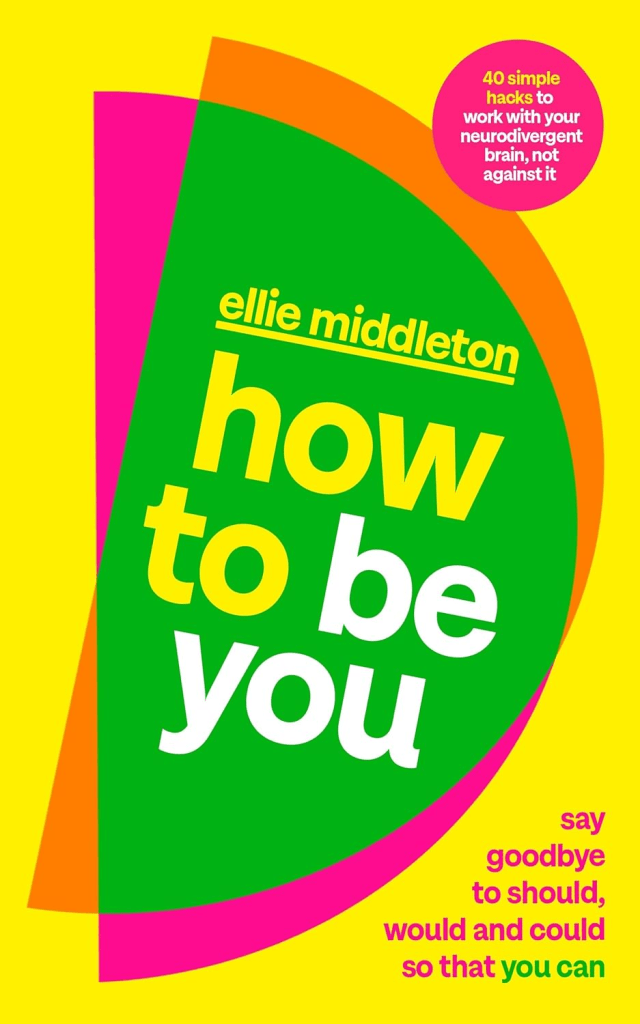
Ellie Middleton is back with a new, practical book to help you work WITH your neurodivergent brain rather than AGAINST it. In each chapter, she writes about the eight executive functions that neurodivergent people struggle with including working memory, prioritisation and emotional regulation and shares 5 simple tips for readers to try out, including:
– Creating a launch pad to remember the essentials when you leave the house
– Drawing a car park of ideas to help visualise your thoughts and manage impulse control
– The 5, 4, 3, 2, 1 mindfulness technique to prevent spiralling and regulate emotions
– Breaking up each day into Four Quadrants to approach every day with more flexibility
This isn’t another journal or planner that claims to organize your entire life because Ellie is the first to admit that she doesn’t have things under control 100% of the time. This also is not a book about how to fit into the neurotypical way of doing things (aka masking). Instead, Ellie reveals why society tells us that we ‘should’ do things (read: patriarchy, ableism, White supremacy) and shows us how we can all free ourselves of those expectations, feel empowered and, ultimately, be more YOU.
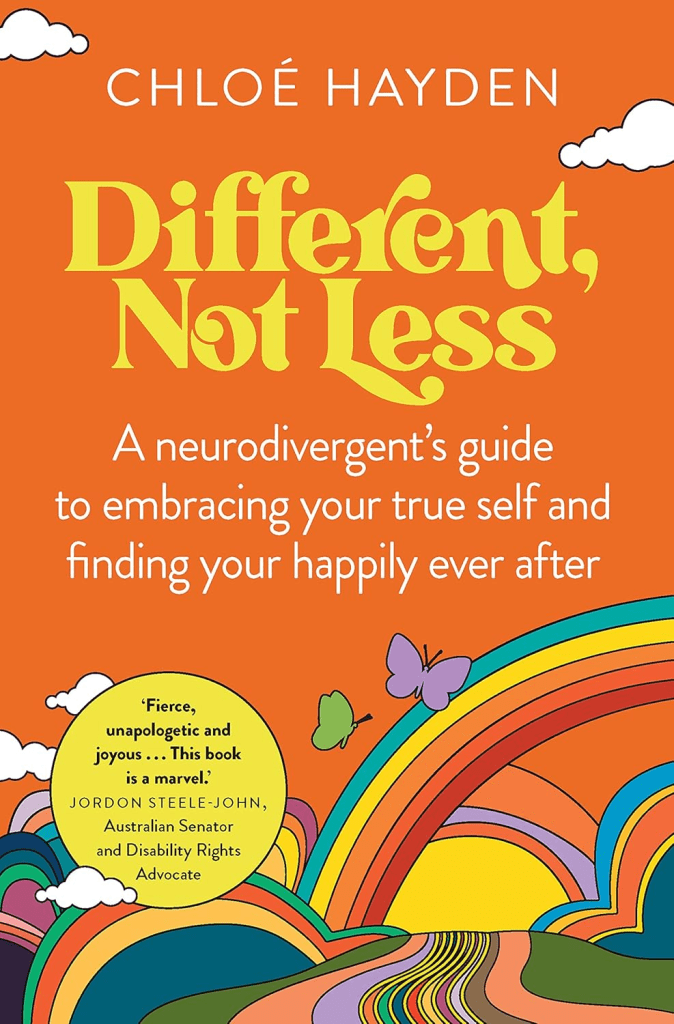
Growing up, Chloé Hayden felt like she’d crash-landed on an alien planet where nothing made sense. Eye contact? Small talk? And why are you people so touch-oriented? She moved between 10 schools in 8 years, struggling to become a person she believed society would accept, and was eventually diagnosed with autism and ADHD. When a life-changing group of allies showed her that different did not mean less, she learned to celebrate her true voice and find her happily ever after.
This is a moving, at times funny story of how it feels to be neurodivergent as well as a practical guide, with advice for living with meltdowns and shutdowns, tips for finding supportive communities and much more.
Whether you’re neurodivergent or supporting those who are, Different, Not Less will inspire you to create a more inclusive world where everyone feels like they belong.

Written by two late-diagnosed neurodivergent women and the founders of fast-growing online community @IAmPayingAttention, HOW NOT TO FIT IN is an handbook-meets-rallying cry.
Foregrounding real experiences with autism and ADHD, this book explores the journey of discovering, accepting and flourishing with your neurodivergent brain. It explores why getting diagnosis can be so fraught and gendered, and how to navigate a world which centres neurotypical brains in the realms of relationships, careers, friendships and finances.
By reading this book, you’ll:
- Start to understand why so many people are being diagnosed with ADHD and autism right now
- Learn the impact that not knowing your own brain can have on your mental health
- Find the confidence to ask for accommodations and adjustments at work – without apologising
- Have the chance to note down how this journey is evolving for you in chapter-by-chapter workbook sections.
- … and, most importantly, get to know yourself and your needs better.
Featuring the latest research and thinking on neurodivergence, contributions from dozens of experts and the real stories of people just like you, this innovative book – which has been written and designed especially for *spicy* brains – is essential reading for anyone whose brain seems to see the world in a different way.

In this ground-breaking debut, Charli Clement combines their own experiences alongside unique short profiles from individuals with chronic illness, to provide an intimate and insightful look at the complexities of living as an autistic and chronically ill person.
From navigating your diagnosis and healthcare, learning how to manage pain and your own sensory needs to dealing with ableism, medical misogyny and transphobia, Clement offers practical advice and delves into the unique challenges faced by individuals living in this intersection.
With a focus on the unique neurodivergent experience and an exploration into disability pride and joy ‘All Tangled Up in Autism and Chronic Illness’ is a necessary and empowering resource for autistic and chronically ill people as well as for family members, friends, and healthcare professionals.
I could go on and on about the books that I’ve read or heard good things about, but for now I’ll leave it at this. Happy reading!
All my love,
Anna x

 Mending the Broken