Before I dive into today’s post, I want to let you know that this blog is a safe space for anyone who is struggling or feeling isolated in their journey. Whether you’re dealing with mental health challenges, chronic illness, or just trying to navigate your faith in a difficult season of life, you’re not alone. This series is going to explore hard truths, share stories, and hopefully encourage you in a real, relatable way.
So, lets jump in!
It’s common in many faith communities to hear well-meaning phrases like, “If you just pray more, you’ll be healed,” or “Faith will fix this.” But, what happens when healing comes right away, or when the struggles feel too big for just prayer alone? Is there something wrong with your faith if you’re still battling anxiety, depression, or other mental health challenges?
I can’t speak for everyone, but I know I’ve struggled with this question. Growing up as a Christian, I have felt guilty for feeling anxious or depressed, as though it meant I wasn’t praying enough, or that somehow my relationship with God was lacking. But the truth is, struggling with mental health doesn’t mean we lack faith. Mental health issues don’t discriminate – they can affect anyone, no matter how strong their faith may be. It’s a misconception that if you’re truly trusting God, you won’t struggle with things like depression, anxiety, or even feeling overwhelmed by life. Struggling does not mean failing.
So, where does that leave us?
When we look at the Bible, we see that mental health struggles are acknowledged throughout Scripture. Even some of the greatest figures of faith faced dark, difficult times. The Psalms are full of David’s cries of despair – his deep sadness and his feelings of abandonment. Take Psalm 42, for example: “Why, my soul, are you downcast? Why so disturbed within me? Put your hope in God, for I will yet praise him, my Saviour and my God.”
David was honest with God about how he felt. And I believe God honoured that honesty. He doesn’t expect us to put on a mask and pretend that everything’s okay when it’s not.
And here’s the tricky part: many of us grow up with an idea that if we’re struggling, it’s because we’re not praying enough, or that God is punishing us for something. We see others who seem to have it all together – who are calm, confident, and free from anxiety – and we thing, “Well, what’s wrong with me?” And the guilt and shame can grow, making it even harder to seek help.
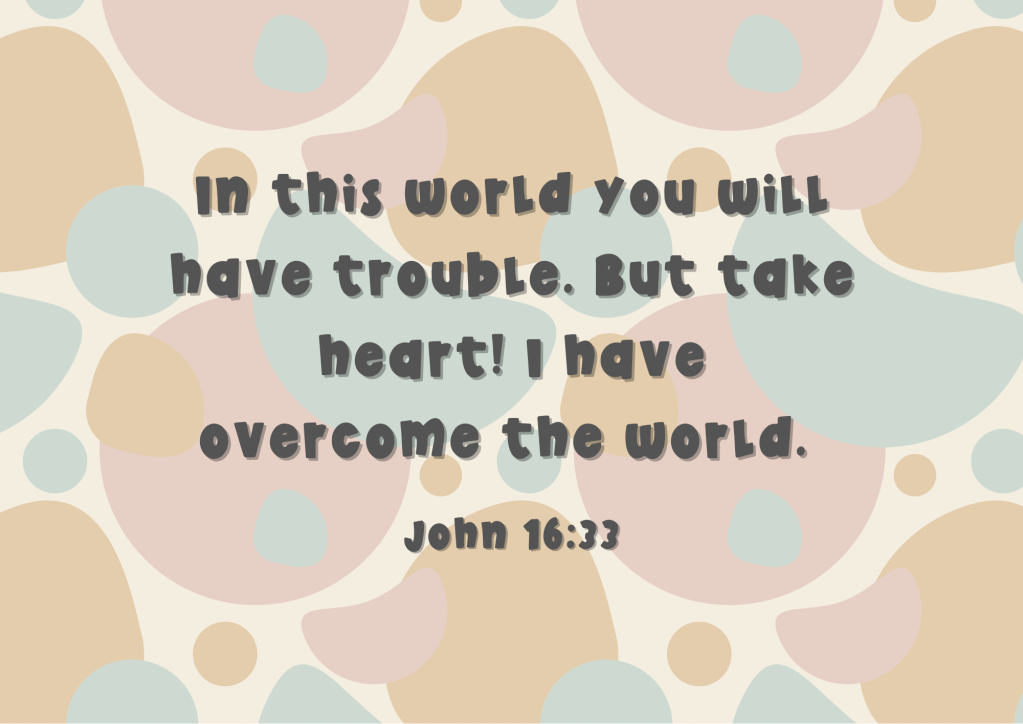
It’s that mindset that I want to challenge today. The truth is, just because we have faith doesn’t mean we won’t face challenges. Jesus himself said, “In this world you will have trouble. But take heart! I have overcome the world.” (John 16:33) That verse doesn’t say “If you have enough faith, you won’t face difficulty.” It says that, even in the midst of difficulty, we can take heart because Jesus has overcome it all. He’s with us in our pain, our struggles, and our doubts.
And that’s something that’s been something so powerful in my own journey: understanding that God is with me in the struggle. He doesn’t leave us when we’re struggling mentally or emotionally. I’ve learned that struggling with mental health doesn’t mean we’re failing God or our faith – it means we’re human. And God knows what it’s like to be human. He became human in Jesus, and he understands our pain in a way that no one else can.
I’ve also found it hard to accept that, just because I’ve had therapy and take medication, it doesn’t mean I’m not strong enough. But, faith is not about denying reality or pretending that everything is okay. Faith is about trusting God through the hard stuff – through the things we can’t fix on our own. Faith is not a magic fix for our pain; it’s a relationship with a God who holds us, even when we’re at our lowest.
If you’re struggling with mental health today – whether that’s anxiety, depression, stress, or anything else – I want you to hear this: It’s okay not to be okay. Your mental health is just as important as your physical health. And God sees you. He cares about what you’re going through. And he wants to help you through it.
Another scripture that has brought me so much comfort in times of struggle is Philippians 4:6-7. It says “Do not be anxious about anything, but in every situation, by prayer or petition, with thanksgiving, present your requests to God. And the peace of God, which transcends all understanding, will guard your hearts and minds in Christ Jesus.”
Now, I know that verses like this can sometimes feel like a ‘quick fix’ that doesn’t address the depth of what we’re going through. But I want to highlight that the peace of God doesn’t mean the absence of struggle. It means that, in the midst of struggle, God’s peace can still hold us. It’s not about getting rid of the anxiety or pain, but about experiencing peace through it.
So, my takeaway message if this: If you’re struggling with your mental health, it doesn’t mean that you’re weak in faith, and it doesn’t mean that you’re doing something wrong. In fact, it might mean that you’re being brave enough to face something difficult – and that’s something that God honours. Don’t let shame or guilt keep you from getting the help you need. Whether it’s therapy, medication, or a supportive community, there is no shame in seeking help. Faith is about trusting God in the journey, not denying that we’re needing help along the way.
So, as I finish, I want to encourage you to take a moment to reflect on how God might be inviting you to trust him with your mental health. What steps can you take to care for yourself, body, mind, and spirit? Maybe it’s something small, like acknowledging your struggles or reaching out for help.
All my love,
Anna x






 Mending the Broken