Chronic Hope

At the end of last year I started to think and pray a lot about writing my own chronic illness themed Bible Study. It’s been a labour of love but here are weeks one and two of the study!

It is a 6 week study with something short to read each day and some reflection questions. If you want to join the Instagram channel I have set up for the study you can do so here: https://www.instagram.com/channel/AbZhRgYpHFwf3G7m/ or you can join the Facebook group ‘Christians with Chronic Illness’ here: https://www.facebook.com/share/g/1C1v8zPen4/?mibextid=wwXlfr

These are intended as safe spaces where you can discuss the study with other Christians and reflect a little as a group – we’re going to be starting with Week 1, Day 1 on Monday 8th September and would love to have you join us! There’s no pressure to join in or contribute, but sometimes it can be nice to be in an environment where you know other people ‘get it’.

Eventually, I am going to publish the study as a book on Amazon but wanted to do a soft launch here – any feedback would be hugely appreciated! I will add the remainder of the study to another post once I have finished editing it, so keep an eye out for the rest coming soon.

All my love,

Anna x

What You Don’t See in the Hospital Notes

I’m back again! It’s been a while since I’ve written and I’ve spent the last 6 weeks in hospital which I think has inspired this post a little.

(Note: the hospital note ‘excerpts’ are fictional, though loosely related to my medical history)

Presenting Complaint

21-year-old female presenting with widespread joint pain, reported fatigue, and possible post-viral symptoms. Multiple prior admissions for unexplained symptoms. Patient appears anxious. History of suspected EDS and functional overlay. Further investigation not indicated at this time.

You don’t write that I had to crawl from the bedroom to the front door because I couldn’t stand upright. That I clung to the banister like it was a rope on the edge of a cliff. That the GP told me, again, it was probably stress.

You don’t mention the way I’d rehearsed my speech in the ambulance. “Don’t say you’re tired. Don’t say you’re scared. Say it hurts. Say you can’t walk. Say the fatigue is overwhelming. Say it like a symptom, not a feeling.” You don’t see the notes I wrote on mu phone because I was afraid I’d get flustered and forget.

You say I “appeared anxious.” As if that explains everything.

You don’t mention that I smiled to be taken seriously. That I didn’t cry because I knew tears are perceived as hysteria. That I lay on the hospital bed with my fists clenched under the blanket, whispering prayers to myself while a junior doctor asked if I might be exaggerating.

You didn’t see me pull on clean socks even though I couldn’t lift my legs. I didn’t want you to think I was dirty. You didn’t see the notebook where I tracked my pain every hour. The part of me still hoping I could prove it.

You wrote “further investigation not indicated.”

I called my mum in the waiting room, whispered, “They think I’m making it up again.” She said, “You’re still breathing. That’s what matters right now.”

That was the first night I started to believe I might survive this, even if the system didn’t believe me.

Mobility and Function

Uses wheelchair part-time. Patient encouraged to mobilise independently. No structural impairment observed. Advised that deconditioning may contribute to perceived mobility issues. Referral to physiotherapy provided.

Perceived mobility issues.

You watched me drag one leg behind the other and called it “perceived.” You watched me tip over sideways from standing and called it “anxiety.” You gave me physio exercises on a photocopied sheet and suggested I just needed to “rebuild confidence.”

You didn’t ask how it felt to move through a world that isn’t made for me. How I still take the longer route through town to avoid the hill, the stairs, the uneven curb. How I once sat outside a building at university in the pouring rain because there wasn’t a ramp out.

You called my wheelchair “part-time,” as if it’s a job I clock in and out of. As if that isn’t your language, not mine.

You didn’t notice how my shoulders dropped with relief when I finally sat in it. How it meant I could go to the shop again, to the library, to the park. How it gave me my body back. You didn’t hear the joy in my voice when I wheeled myself across the hospital car park for the first time in months.

You didn’t see the nurse who brought me a cup of tea and said, “Looks like you’ve done this before.” Like she saw me.

You didn’t write about the stranger in the corridor who told me, “You’re too young for that thing,” pointing to my chair. Or when I replied, “You’re too old to be that rude,” and rolled away smiling. You didn’t document the power I felt in that moment.

I didn’t lose mobility. I reclaimed freedom.

Nutrition and Feeding

Enteral nutrition via NG tube commenced. Patient demonstrated distress during insertion. Limited oral intake reported. Encouraged to increase hydration. Patient appears disengaged from treatment plan.

The first time they inserted the NG tube, I gagged so hard I bruised my own throat. The second time, I asked if I could hold someone’s hand. A junior doctor reached out wordlessly. You didn’t write about her.

You didn’t write about the tape rash on my face or how the pump beeped at 2am like a fire alarm. How I hated being tethered to a machine and loved it, too. It meant I didn’t have to explain, that my body was nourished. It meant I could rest.

You didn’t see me name the tube. Her name was Nelly. Because if I was going to let something live in my body, it might as well have a name.

You said I was disengaged. But I learned how to test the pH myself. I set up the feeds, monitored the pump, calculated the right overnight rate needed. I became a walking spreadsheet, ironic as walking wasn’t possible.

You never asked how it felt to be constantly fed but still hungry – for flavour, for choice, for something warm and familiar. You didn’t mention that I kept imagining my childhood favourite ‘tuna and rice’, picturing the way my mother always served it with a smile. How I wished I could just eat a normal meal but no longer had the energy.

You didn’t see the nurse who brought me stickers to decorate the pump, or the healthcare assistant who used to turn each feed bottle into a different smiley face each night. You didn’t talk about the friend who came to visit and made me laugh so hard until the tube kinked.

I was never disengaged. I was just exhausted. I am. But I am here.

Pain Management

Patient reports widespread pain, self-rated 9/10. No signs of acute distress observed. Request for opioid medication declined due to potential for dependency and possible drug-seeking behaviour. Advised to manage symptoms with paracetamol and CBT techniques.

No signs of acute distress.

I’ve lived in this body for 21 years. I know how to keep my face still when everything inside me is screaming. I know how to breathe through muscle spasms and dislocations and the grinding, electrical throb in my spine. I know how to speak softly so you’ll keep listening.

You don’t see the hours I spent curled around a hot water bottle, willing the pain to plateau. The pain that doesn’t come in spikes but waves – tidal, relentless, cruel.

You declined my medication request and suggested mindfulness. I said, “Do you want me to breathe my way out of a subluxed knee?” You smiled like I’d made a joke.

You didn’t see the nurse who whispered, “I believe you,” and slipped me a heat pack.

You didn’t write about the laughing fit I had with my sister when I was trying to get up the stairs and we both fell down laughing. Not because it didn’t hurt, but because it did – and laughter was the only way through it.

You didn’t see the wall I decorated with song lyrics and pain scale doodles, keeping them within arms-reach in case I needed to put a number to my pain, again. Or the fact that every day I wake up and try. No matter how shitty I feel.

Not because I’m brave. Because I have to.

Discharge Plan

Medically stable. Fit for discharge. Patient advised to follow up with community team and contact GP if symptoms worsen. No additional interventions recommended at this stage.

Medically stable. That was your way of saying, “We don’t know what else to do with you.” Because I certainly didn’t feel stable.

You didn’t mention the way my heart raced as I crossed the threshold. Not because I wasn’t glad to leave, but because I knew I’d be back. Because stable doesn’t mean safe. It doesn’t mean well.

You didn’t see the way I curled up in bed that night, every joint aching from the journey, every nerve on fire. But also: the softness of my own sheets. The cat who lay on my feet. The way I whispered to myself: I’m still here.

I wrote my own discharge note:

Survived. Scarred. Unseen – but still fighting.

All my love,

Anna x

May 2025 Poetry Challenge

Anyone who knows me, knows that I love poetry. I love writing it, reading it, analysing it – there is just something about it that helps to calm me and get my thoughts out on paper. I thought I’d do something a little bit different and start a poetry challenge. Please tag me in your poems (@recovering_my_ sparkle on Instagram) and use the hashtag maypoetrychallenge as well!

  1. A letter to your past self – what advice would you give the younger you?
  2. A place that feels like home – describe a location that brings comfort to you.
  3. Things left unsaid – write about words you never said out loud and what they mean to you.
  4. Roots and wings – write about growth and freedom.
  5. The language of flowers – choose a flower and let it ‘speak’.
  6. Firelight and shadows – explore warmth and fear in contrast using the metaphors of fire and shadows.
  7. Echoes of laughter – pick out a joyful memory and write about that.
  8. The love that changed you – whether it’s romantic or platonic, how did this love shape you?
  9. If your reflection spoke back – what would it say?
  10. A letter from the stars – what would they say?
  11. A scar tells a story – physical or emotional, what do your scars say?
  12. The first time you felt free – capture that moment and the emotions that you felt.
  13. A secret you never said – it can be real or imagined.
  14. A thunderstorm inside you – how does this feel?
  15. Love letter to a stranger – write to someone you’ll never meet.
  16. The ghost of someone still alive – a person who drifted away.
  17. The taste of nostalgia – capture a memory through tatse.
  18. A storm that never ends – what would it feel like to live inside this?
  19. The colour of loneliness – what colour would it be, and why? Is this something you can relate to?
  20. A world without fear – imagine it, describe it, paint a picture (through words) about what it would be like.
  21. If I could hold time in my hands… – Start by finishing this line, what would you do with it?
  22. A place you can never return to – physically or emotionally.
  23. A dream that felt more real than reality – what happened?
  24. Write a poem that ends with a beginning – a cycle, a rebirth, a new start.
  25. A clock that runs too fast (or too slow) – what would it change?
  26. The garden that only blooms at night – what would grow there? What things bloom and thrive in the darkness?
  27. The sound of healing – talk about what you believe healing, recovery, forgiveness, or peace sounds like.
  28. A conversation with the moon – what would you say? What would it reply?
  29. Tomorrow begins with… – finish the thought.
  30. The first line of a new chapter – what do you think is next for you in your life?

Let me know how you get on!

All my love,

Anna x

Is This What Safe Looks Like?

I recently wrote, performed and shared this spoken word poem on my TikTok account and it seems that a lot of people could relate to it. If you can relate, I’m incredibly sorry, but I also hope you find some comfort in knowing that you’re not alone in feeling this way.

They say,

“Call for help.”

But I did.

And help came

with flashing lights

and cold stares

and hands too firm

for someone already breaking.

“Trust the system,” they said.

But I did.

And the system strapped me down,

spoke over me

called me non-compliant

when I was just

trying not to fall apart.

Safe?

You tell me what’s safe

about being told

your story is “too much”.

That your pain

needs a label

before it gets attention?

What’s safe

about uniforms

that make your skin crawl,

white coats

that feel like warning signs,

and police who ask questions

but don’t really want the answers?

I learned the hard way:

“Safe” is a lie

when you’ve been hurt

by the helpers.

When your cries

get translated into crazy.

When your trauma

gets brushed off as behavioural.

When your body

is treated

but your soul

is left bleeding in the waiting room.

You see,

no one tells you

how much bravery it takes

just to walk through the door

of a hospital

when the last one left scars.

No one talks about

how the ones with the power

can do damage

with a clipboard and a checklist,

with a shrug,

with a sedative

with a look that says,

“You again?”

This is what it’s like to be afraid

of the people you’re told to run to.

To flinch

when the sirens wail

in the streets.

To go quiet

in the presence of authority

because the last time you spoke –

it cost you something.

So don’t ask

why I didn’t tell you sooner.

Why I waited.

Why I lied and said “I’m fine.”

Because when “help” feels like harm

silence becomes survival.

And I’ve mastered the art

of sounding okay

just enough

to stay alive.

But I’m tired.

I want safe

to mean something again.

I want healing that doesn’t hurt.

I want care that listens before it labels,

that asks before it acts,

that sits with me

before it tries to fix me.

Because I’m not a problem.

I’m a person.

And I don’t want to be saved –

I want to be seen.

Here is a link to the original TikTok incase you want to hear it spoken rather than just reading it:

https://vm.tiktok.com/ZNdYwQbUu/

All my love,

Anna x

When Healing Doesn’t Come: Trusting God in the Waiting

This post is one that is hugely personal to me and is on a topic that I have spent a long time looking at and learning about. If you have ever prayed for healing – whether that’s mental health, physical health, or emotional wounds – you will know how hard it is when healing doesn’t come in the way you expect.

Perhaps you’ve cried out to God, but your depression still lingers. Maybe you’ve begged for relief from physical pain, but the symptoms persist. Maybe you’ve asked God to heal the wounds of trauma, but you still wake up feeling broken. When healing doesn’t come – or when it comes slowly – it’s easy to feel forgotten, discouraged, or even angry at God.

If you’ve asked God, Why haven’t you healed me? I want you to know that you are not alone. You only have to look through the Bible to see this. Some of the people we most associate with faith wrestled with this question.

Paul, for example, had what he called a ‘thorn in the flesh’. Whilst we don’t know what it was exactly – some people believe that it was a chronic illness, others think it was emotional suffering – but what we do know is that Paul pleaded with God three times to take it away. And God’s response?

“My grace is sufficient for you, for my power is made perfect in weakness.” (2 Corinthians 12:9)

That wasn’t the answer that Paul was looking for. He wanted healing. But instead, God gave him grace. And that’s hard to accept, isn’t it? Because when we pray for healing, we don’t just want grace to endure – we want relief. And when it doesn’t come, it becomes easy to wonder if God is even listening.

I think that one of the hardest things about faith is that we often expect healing to come in a specific way, but God sees the bigger picture.

Does that mean we shouldn’t pray for healing? Not at all. Jesus himself healed people throughout the Gospels. God is a healer, and we should absolutely bring our needs to Him. But sometimes, it doesn’t happen in the way we expect.

Maybe healing is happening slowly, in a process instead of a miracle. Maybe healing isn’t just physical, but emotional or spiritual. Maybe healing comes in the form of endurance and peace in the middle of suffering, rather than the removal of the suffering itself.

One of my favourite reminders of this comes from Isaiah 43:2

“When you pass through the waters, I will be with you; and when you pass through the rivers, they will not sweep over you. When you walk through the fire, you will not be burned.”

God doesn’t promise we won’t walk through deep waters or fire. But He does promise to be with us in it.

Holding Onto Faith in the Waiting

So, what do we do when healing feels out of reach? How do we hold onto faith when we’re still in the middle of pain?

  1. Be honest with God – God isn’t afraid of your frustration, your disappointment, or your doubt. If you feel angry, tell Him. If you feel weary, cry out to Him. The Psalms are full of raw, unfiltered prayers – God invites that kind of honesty.
  2. Remember that suffering is not a sign of abandonment – one of the biggest lies we believe is that if we’re still suffering, it must mean God has forgotten us. But the cross tells a different story. Jesus Himself suffered, not because He lacked faith, but because suffering is part of life in a broken world. God’s presence is not proven by the absence of pain – He is with us in the pain.
  3. Look for small signs of grace – sometimes, healing comes in unexpected ways. Maybe you’re not free from illness, but you’ve found a deeper sense of peace. Maybe you still struggle, but you’ve built a community that walks with you. Healing isn’t always about the absence of pain – it’s also about the presence of God’s grace in the middle of it.
  4. Keep hoping, even in the unknown – it’s okay to wrestle with God’s timing. It’s okay to not understand. But don’t lose sight of this: the story isn’t over yet. We may not see full healing in this life, but as Revelation 21:4 reminds us, there is a day coming when:

“He will wipe every tear from their eyes. There will be no more death or mourning or crying or pain, for the old order of things has passed away.”

And that is the ultimate hope we cling to. One day, all suffering will end. Until then, God walks with us through it.

I recently read Ruth Chou Simons book ‘Now and Not Yet’ and it changed my perspective completely. I highly encourage reading it if you have struggled with trusting God in the waiting. The book touches on seasons of waiting and when life isn’t what we have hoped or planned.

“I truly believe your current season is not wasted,” writes Simons. “God is purposeful about what happens between today and tomorrow, between right now and someday. My prayer is that we stop hiding behind simple platitudes and quick fixes to our unwanted right nows and bravely step into the ways God wants to change us… instead of staying busy trying to change our circumstances.”

All my love,

Anna x

Flowers Grow in the Valley

One of my favourite songs is called ‘Flowers’ by Samantha Ebert. It is a song that means an awful lot to me for a lot of reasons, but the main one is this: it is a song that God has used to show me his love and plan for my life on numerous occasions. Here is the story of the first time I listened to the song and how God spoke to me – for some context, this was during my admission to hospital last year whilst I was on the gastro ward just before my transfer back to my local psychiatric hospital.

The day before my transfer back to the psych ward, I had a visit from one of the hospital chaplains. She had visited me a few times during the seven weeks I was there and had always been kind to me, offering words of comfort and prayers during some of the hardest moments of my admission. That day, she told me about a song she had recently come across, one she thought I might like. “It’s called ‘Flowers’ by Samantha Ebert,” she said. “I really think you should listen to it.”

Later that evening, as I lay in my hospital bed, headphones in, I pressed play. The melody was soft, delicate, and the lyrics hit me in a way I hadn’t expected. “I’m a good God, and I have a good plan, so trust that I’m holding a watering can, ’cause flowers grow in the valley.”

Tears welled in my eyes as I listened. The words felt as if they had been written for me, a direct reminder that even in my lowest moments, God had not abandoned me. That He was still here, still holding me, even when I felt completely lost. I listened to the song on repeat until I fell asleep, letting those words seep into the cracks of my broken heart.

The following day, I was transferred back to the psych ward. It was an exhausting process, as hospital transfers always are. The endless waiting, the signing of forms, the final checks and cannula removals, before I was wheeled through the corridors, leaving behind the world of NG feeds and IV drips for another round of locked doors and psychiatric reviews.

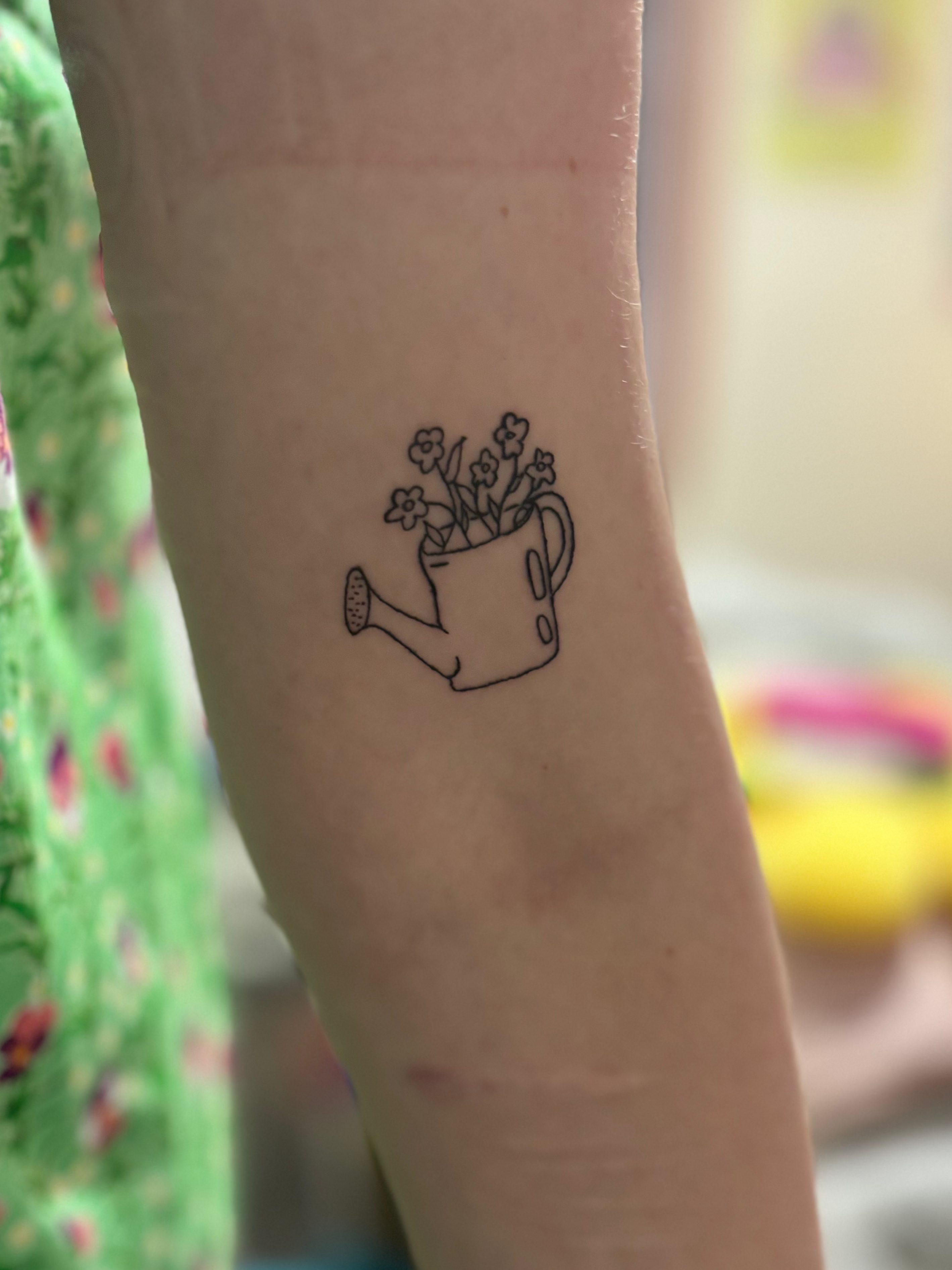
I barely had time to settle back into my room before there was a knock at the door. It was one of the occupational therapists, someone I had always found easy to talk to. She smiled at me, holding out a small watering can and a packet of flower seeds. “You missed the group activity this morning,” she said. “We were planting flowers, but I thought maybe you’d like to do it with me now?”

I stared at her, my breath catching in my throat. A watering can. Flower seeds. Flowers grow in the valley. I felt my heart pound, an overwhelming sense of something greater than coincidence washing over me. I blinked back the tears threatening to spill over and nodded, unable to find the words to explain just how much this moment meant to me.

We sat on the floor of my room, scooping soil into small pots, carefully pressing seeds into the earth. As I watered them, I thought about how God had sent me a reminder in the most unexpected way – that I was still being nurtured, that even in this valley, something beautiful could grow.

I’ve included a link to the song here – I really recommend listening to it!

All my love,

Anna x

Myalgic Encephalomyelitis and me

My journey with Myalgic Encephalomyelitis (ME) is one that I could never have anticipated, and yet it has shaped my life in ways I am still trying to comprehend. It has been four years since I received the diagnosis, which, in the grand scheme of things, is not that long. But to me, it feels like a lifetime. A lifetime of limitations, of losses, of learning to navigate a world that no longer fits the way it once did.

Of all the chronic illnesses I have been diagnosed with, ME is the one I would get rid of in a heartbeat. It is cruel beyond belief. It strips away the ability to live life in any predictable or reliable way. There is no cure, no universally effective treatment – only management, and even that feels like a fragile balance. Some days, I can do more. Other days, even sitting up is too much. The unpredictability of it is one of the hardest things to live with. 

There have been times over the last four years where I have been completely bed-bound, unable to do anything but lie in the dark, too exhausted and in too much pain to even sit up. Those periods were terrifying, but I always held onto hope that I would find my way back to a more functional state. And, at times, it did. There were moments when I could leave my flat for short trips, where I felt like I was reclaiming slivers of my old life. But now, since sepsis, those moments are fewer and farther between.

I can now only leave my flat for essential appointments, the ones that must be attended in person. Anything that can be done from home, I do remotely. My world has shrunk in ways I never thought possible. I require a wheelchair to mobilise outside because my legs are too unstable to carry me for any meaningful distance. Inside my flat, I often rely on a walking stick to move between rooms. Even then, most of my day is spent in bed, waiting for the couple of ‘functional’ hours I am granted each day. Those brief windows of time where I feel somewhat capable of doing small tasks, of engaging with the world beyond my bed. 

One of the most distinct and cruel markers of ME is the way your body punishes you for overstepping its limits. When I push too hard, even slightly, I pay for it. The flares are brutal, and the warning signs are unmistakeable. When I have overdone it – whether that means sitting up too long, engaging in too much conversation, or even just focusing too hard on something – I feel it almost immediately. My legs burn as if they are on fire, a sensation so intense that it is impossible to ignore. It is my body’s way of screaming at me that I have no rested enough, that I have ignored its pleas for stillness.

The thing about ME is that it is not just about fatigue. That word does not do justice to the bone-deep exhaustion that no amount of sleep can fix. It is like being weighed down by an invisible force, making every movement feel like wading through cement. It is pain that radiates through my muscles and joints, an unrelenting ache that never truly disappears. It is cognitive dysfunction – brain fog so thick that I forget simple words mid-sentence, struggling to focus, and sometimes feel as though my mind has simply stopped working altogether. It is sensory overload, where lights are too bright, sounds are too loud, and even the touch of fabric on my skin can feel unbearable.

Since sepsis, my body has become even more fragile. I used to have at least a little energy to ration throughout the day, but now, every action comes with a cost. The simplest tasks – brushing my teeth, getting dressed, making a cup of tea – feel monumental. I have to think about every movement, weigh whether it is worth the energy expenditure, knowing that if I push too far, I could be bedridden for days. My life has become a delicate balancing act between doing too much and not doing enough.

Sleep offers no relief. No matter how many hours I spend resting, I wake up just as drained as before. And even on nights where exhaustion consumes me, sleep doesn’t always come easily. The pain, the discomfort, the sheer weight of my body’s brokenness keeps me tossing and turning, desperate for rest that never truly arrives. When I do sleep, I wake up feeling like I have run a marathon in my dreams, my muscles aching as if I had been fighting through the night. 

The isolation that comes with ME is another layer of cruelty. I have lost the ability to maintain relationships the way I once could. I miss out on gatherings, on conversations, on simply being able to exist in the world in a way that feels normal. Friends and family understand to an extent, but unless someone has lived through it, they can never fully understand. My dad was actually diagnosed with ME when I was a baby and, though he doesn’t struggle any more, it means that my family have a very good understanding of my day-to-day life.

I miss spontaneity. I miss being able to say yes to things without immediately calculating the toll it will take on my body. I do not know what the future holds for me in terms of ME. It is scary waking up each day, not knowing how the day will go, what your body will cope with. And it is terrifying when you experience a decline – is this what is going to tip your body over the edge? Is it just a temporary flare, something that’s going to stick around for a long time, or, god-forbid, be permanent? 

What I do know is that, since sepsis, things have been worse than ever before. I have lost more than I ever thought I could, and I am still trying to come to terms with that. But I have also learned resilience in a way that few people understand. I have learned to exist within my limitations, to navigate a life that looks nothing like the one I imagined. And, most of all, I have learned that survival is not just about living – it is about adapting, about finding ways to exist within the cracks of what was lost, about holding onto hope even when it feels like everything is slipping away. 

My next post is going to talk about what people with ME want you to know, as well as exploring some of the ways other people with the condition describe it to others.

Until then,

All my love,

Anna x

Debunking Common Myths About Therapy

Therapy is a powerful tool that anyone can benefit from – it can help with personal growth, healing, self-discovery and compassion towards both yourself and others. Yet, despite more and more people speaking about therapy and what it entails, there are still myths surrounding it which can cause hesitation and doubts about whether it is something to consider.

Therapy is only for people with ‘serious’ mental health issues:

Therapy isn’t just for those with severe mental health issues or those in crisis. It is a resource that can be used by anyone facing life challenges, seeking personal growth, or wanting to understand themselves better. I had a Psychology teacher when I was studying for my A Levels who told me that she really strongly believed that everyone, mental health conditions or not, should have to have therapy at some point in their life – and looking back, I absolutely agree!

Talking to friends and family is just as effective as therapy:

I am absolutely NOT wanting to dismiss the invaluable support that friends and family can offer you – I have incredible support from my family and friends and I wouldn’t be able to do life without them by my side. Therapy, however, offers something different. Therapists are trained professionals who are there in a neutral, non-judgemental capacity. They use evidence-based techniques to help you process emotions, identify patterns, and develop coping strategies.

Therapy takes forever to work:

How long therapy takes to work is entirely dependent on your goals and needs. Some people find huge benefits within a few weeks, whereas others benefit more from long-term work. It’s something to discuss with your therapist as they are in the best position to help you determine what is best for you.

The therapist will judge me or think that I am broken beyond repair:

Therapists are there to provide empathy and understanding, not to judge you. They aren’t there because they think you are broken and need fixing – they just want to help you work towards your goals in a partnership with you.

Therapy is all about your childhood experiences:

For some people, talking about their childhood is absolutely necessary. And for most people, looking at past experiences can be helpful, but therapy isn’t solely focused on the past/your childhood. The therapeutic process should be tailored to address your current concerns, whether they stem from past or present experiences.

My therapist will solve my problems for me:

As nice as this would be, it’s simply not possible for the therapist to do the work for you. Ultimately, change has to come from you – the therapist can help you and give suggestions and guidance, but you have to be the one to make those changes. One of my most commonly used phrases in my therapy sessions used to be “but I’m paying you to agree with me” which would inevitably result in an eye roll and being reminded that she definitely is NOT there to agree with me – it would be nice if she did, but then no progress would be made and therefore it would be a huge waste of time – for me and for her.

Believing myths like the ones discussed here can prevent people from seeking therapy when they need it most. So it’s important to challenge these misconceptions so that people are informed and have an accurate depiction about what therapy is like. If you’ve been hesitant about therapy, remember: it is a tool for everyone! Taking that first step could be the start of the rest of your life and provide the transformation and growth that will turn your life around.

All my love,

Anna x

I Met My Younger Self

I met my younger self for coffee this morning.

She arrived on time, I was 10 minutes early.

She ordered a skinny, zero sugar vanilla latte. I ordered a caramel latte – no ‘skinny’ or ‘sugar free’ in sight.

She said she worries that she’ll never get back to work, is sad that she is missing out on all the life experiences she was looking forward to because chronic illness is cruel. I said I agreed, but that at least she’d learn there’s life beyond an eating disorder.

I tell her that it’s ok to feel lost and alone – because it’s not a feeling that will last forever.

She tells me that she’s scared she’ll always feel like an outsider or that something is ‘wrong’ with her. I tell her that she’ll find her people. People who love her and understand her, and that she’ll finally learn there is nothing wrong with her after all.

She told me that she feels on edge and frustrated whenever she has to use a walking stick or wheelchair. I tell her it’ll become second nature and people won’t care about it.

She asked me if I believed that God has a plan for her life. And for the first time in a long time, I could tell her I did.

I hope I can meet her for a coffee again soon.

All my love,

Anna x

Loneliness in Chronic Illness

Living with chronic illness is a journey that is full of challenges – physical, emotional, social – you name it, it can be a challenge. Among these, loneliness is something that is incredibly common but is also underestimated by a lot of people. Chronic illness fundamentally reshapes your entire life – activities that one brought you joy may no longer be possible due to pain or fatigue, friends and family may struggle to understand your limitations which also leaves you vulnerable to feelings of loneliness.

Social events often require energy and effort that a lot of people with chronic illness are unable to participate in. Spoon theory is a good way to describe the energy limitations that are imposed on someone with a chronic health condition, and often we simply lack the ‘spoons’ needed. This can lead to feelings of isolation as being around friends and family is how we feel connected and is something that people need – we use solitary confinement in prisons as a punishment because it removes that connection that all humans need.

As well as this, when people misunderstand our illness or limits that we have, it can lead to a lack of empathy or patience. It’s understandable that, unless you’ve got a chronic health condition yourself, you can’t fully comprehend what life is like. And as chronic illnesses are so unique and symptoms vary drastically from person to person there can be misunderstanding between individuals with the same condition. It often feels like no one understands what life can be like, and this is a lonely place to be!

Loneliness doesn’t just stem from chronic illness either – it can actually worsen it. Social isolation can exacerbate feelings of depression, anxiety, and hopelessness, which can, in turn, amplify physical symptoms. It can feel like a never-ending cycle that is impossible to break.

But despite the loneliness that you may feel, there are other ways to connect with people. I have found communities online that have allowed me to connect with and speak to other people with chronic illness who understand what life can be like. For me, social media is my connection to the outside world – if I didn’t have access to it then life would feel even more isolating for me. I sometimes take breaks from social media as it can feel overwhelming at times, but I do miss the sense of community and understanding when I am away from those groups.

If you know someone who is living with a chronic illness, remember that your understanding and patience can make all the difference. Reach out, listen without judgement, and offer support in whatever way your loved one needs. Offer to pop round for a cup of tea or to go to drop off some shopping. Ask if they want to chat on the phone or over facetime. Find out if they need help with jobs around the house and offer to go over and help them get some bits done. Whatever is needed at the time – knowing that they have people who love and care about them will undoubtedly make the person struggling with chronic illness feel valued and connected to you!

All my love,

Anna x

Managing Guilt – When Chronic Illness Impacts Relationships

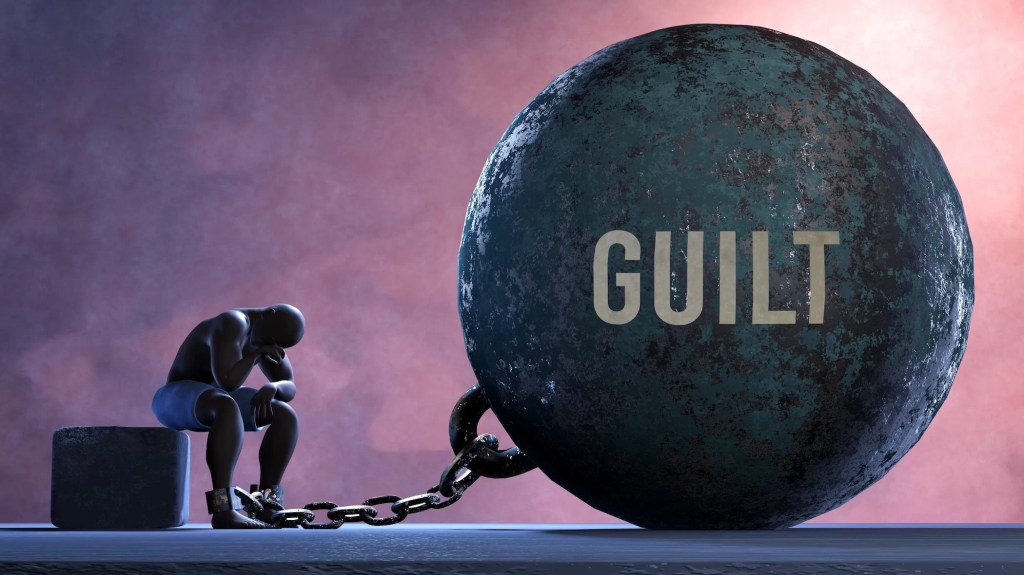
Chronic illness doesn’t just affect you, the person experiencing it – it has a ripple effect that spreads out to family, friends, colleagues. Something that I know a lot of people struggle with is the feelings of guilt that can arise because of this. Guilt can stem from feeling like a burden, missing out on social or work related events, or needing additional help from others. While this is a natural way to feel, it can have a long-lasting impact on mental health and relationships.

There are numerous reasons that you might feel guilty when struggling with chronic illness. Often people describe feeling like a burden as they require more support with things like shopping, cooking, cleaning or even washing yourself. This leads people to feel badly about the amount of time and energy that is being spent on your care. The nature of chronic illness is that they are unpredictable. This can mean that you have to cancel plans last minute and therefore feel like you are letting others down. It can also impact family dynamics and impose limitations on what you can do in terms of work – both of these can cause guilt as you feel like you are disrupting people from living their life or not pulling your weight.

I think it’s important to remind yourself regularly that needing help from others doesn’t mean that you are weak or less valuable. Relationships are mutual and those closest to you want to help you in any way they can. It can help to talk about your feelings of guilt – it may not be obvious to others that you are feeling this way, and talking to them means that they can reassure you that they are happy to help. They say a problem shared is a problem halved, right?

Even if you can’t contribute to things in the same way that you did pre-illness, you can find other ways to show your support, care and appreciation for those around you. Chronic illness is not your fault, and guilt won’t change your circumstances. Think of all the brain space you might free up if you’re not constantly berating yourself for what you can’t do!

Having healthy boundaries can help prevent resentment and allow your relationships to blossom and thrive. Remind yourself frequently that letting other people help isn’t weakness or a sign that you are no longer independent – you can be independent and still ask for help.

Remember this: guilt is a natural response to the challenges of living with chronic illness, but it doesn’t have to define your relationships or self-worth.

All my love,

Anna x

The Power of Being Different – Finding Yourself in Elphaba and Glinda

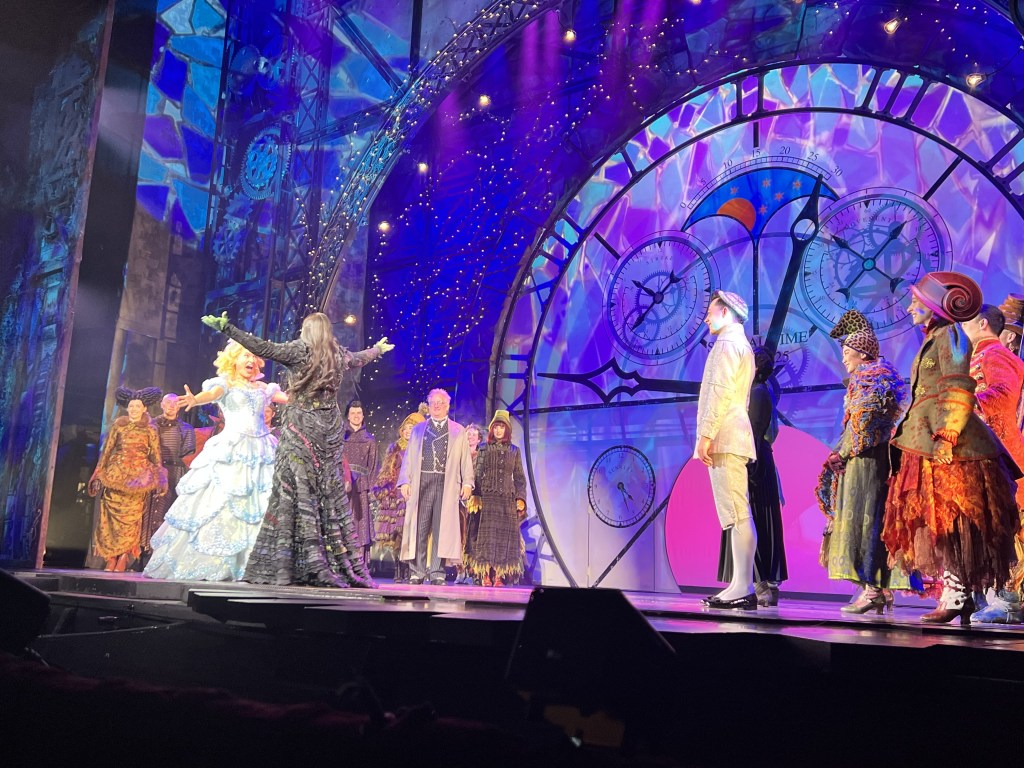
The last time I was lucky enough to see Wicked on their UK tour – I treated myself to front row seats and loved every second!

It’s no secret that I love the musical Wicked – I’ve been lucky enough to see it 7 times and seen 5 amazing Elphaba’s and 6 incredible Glinda’s perform. I used to dream of performing in a West End pit orchestra (and still do if I’m being honest) and Wicked would definitely be my dream show. I absolutely adore every part of it.

When we think of Elphaba and Glinda, it is easy to see them as opposites. Elphaba, the misunderstood outsider stands in direct contrast to Glinda, the sparkling picture of popularity. But the truth is far more nuanced than this. I think everyone has an inner Elphaba and Glinda – often one side more pronounced than the other, but there nonetheless. They’re not just fictional characters; they are symbols, mirrors for the parts of ourself we often hide or struggle to embrace.

Elphaba: For the Misfits and the Rebels

Elphaba is for every person who has felt like they don’t belong, like they’re too much or not enough all at once. She is for the ones who see the world differently and refuse to accept it as it is. She represents the misunderstood, the outcasts, and the rebels who dare to question the rules.

She is for:

  • Every undiagnosed autistic girl who never quite fit in
  • Every child who was labelled “too much” for simply being themselves
  • Every loner who found refuge in books, dreams, or the stars
  • Every person who stood up for what’s right, even if it meant standing alone
  • Everyone who has learned to find power in the very things other people tried to shame them for

Elphaba reminds us that being different isn’t a curse – it’s a gift. Her story is a testament to the strength it takes to stay true to yourself in a world that demands conformity.

Glinda: For the Dreamers and the Evolving

Glinda, on the other hand, is for the ones who thought they had to play by the rules to be loved. She represents the perfectionists, the people-pleasers, and the dreamers who eventually learn that authenticity matters more than appearance.

She is for:

  • Every girl who thought fitting in was the only way to matter
  • Every person who hid their insecurities behind charm and a dazzling smile
  • Every perfectionist who learned that growth comes from vulnerability
  • Everyone who discovered that true power lies not in being adored, but in being brave
  • Every friend who realised that love isn’t about staying the same, but growing together

Glinda shows us that it is never too late to rewrite your story. She reminds us that even the most sparkling facade can hide a heart searching for something real – and that transformation is possible.

Elphaba and Glinda teach us that there is no single way to be strong, no one path to belonging. Elphaba’s defiance shows us the power of staying true to ourselves, while Glinda’s evolution reminds us that growth and change are part of the journey. Together, they challenge us to embrace both our shadows and our light, our flaws and our potential.

Whether you see yourself in Elphaba’s fierce independence, or Glinda’s journey to authenticity – or perhaps a little of both – their stories are for all of us. They remind us that the labels the world gives us don’t define who we are. What matters is how we choose to rise, love, and grow despite them.

So, who are you today? The rebel standing tall against the storm? The dreamer learning to let go of perfection? Maybe, like Elphaba and Glinda, you are a little bit of both – and that’s where the magic truly happens.

All my love,

Anna x

Mourning the Life You Expected

I’ve written about the grief that accompanies chronic illness before, but it’s a topic that I often come back to because it is something that has been so prevalent in my life.

Living with chronic illness often comes with a deep sense of loss. It isn’t just the physical symptoms that affect your day-to-day life, but also the realisation that the life you imagined for yourself might never come to fruition. This feeling of loss can manifest as grief, a complex emotional process that many people with chronic illness experience.

Grief isn’t just something that is limited to the death of a loved one. People often grieve the loss of:

Physical abilities – the things you once took for granted like running, dancing, walking, might now feel or become impossible.

Independence – it’s hard when you have to suddenly rely on other people for help doing tasks that you would have previously handled independently with no problems. This is something that can feel incredibly vulnerable.

Future plans – you might have to give up on career goals, travel plans, or family aspirations, or at the very least, adjust your expectations of what you can realistically manage.

Sense of identity – chronic illness can force you to redefine who you are and how you see yourself. This is something that I have struggled with a lot – who am I without the things that I can no longer do. Who am I if I’m not studying or working?

Grief doesn’t follow a linear pattern at all. There are stages of grief that people go through but the order and time it takes varies massively from person to person. The five stages that people are said to experience are as follows:

Denial – “This can’t be happening to me.” You might ignore symptoms or resist a diagnosis.

Anger – “Why me?” It is completely natural to feel frustration and resentment about your situation!

Bargaining – “If I do everything that the doctors are telling me to do, maybe I’ll get better.” This stage also often involves clinging on to the possibility of a cure or treatment that will make life bearable.

Depression – “What’s the point?” Sadness and hopelessness can feel incredibly overwhelming.

Acceptance – “This is my reality but it doesn’t have to define me.” Accepting your situation doesn’t mean that you like your situation, rather that you are finding ways to move forward despite your diagnosis and struggles.

So, what can you do help cope with these feelings of grief?

You should allow yourself to feel your feelings. Don’t try to bury them because this isn’t going to help and will likely make things more difficult in the long run. It can also help to connect with other people who understand what life with chronic illness is like – I’m very lucky to have found communities on Facebook and Instagram that have allowed me to meet other people in similar situations to myself.

Therapy can also be a very helpful tool. I have been seeing a counsellor for 4 years and she has been my lifeline, offering me a safe space to explore my feelings around my illness. Through therapy I have learned how to be more compassionate towards myself and to respect my body’s limitations. I now respond with kindness when I’m having bad days as I’ve learned that punishing myself is not going to be beneficial.

Grief doesn’t mean giving up – it means making space to acknowledge your losses but also the new opportunities that might arise as a result. Chronic illness may alter your life dramatically, yes, but it doesn’t erase who you are as a person. And it doesn’t have to get rid of your potential for growth, connection, and happiness.

All my love,

Anna x