Not Your Time

Content Warning: This post talks about suicide. Although no details are given please be mindful of this and don’t read on if this is something that might be triggering for you!
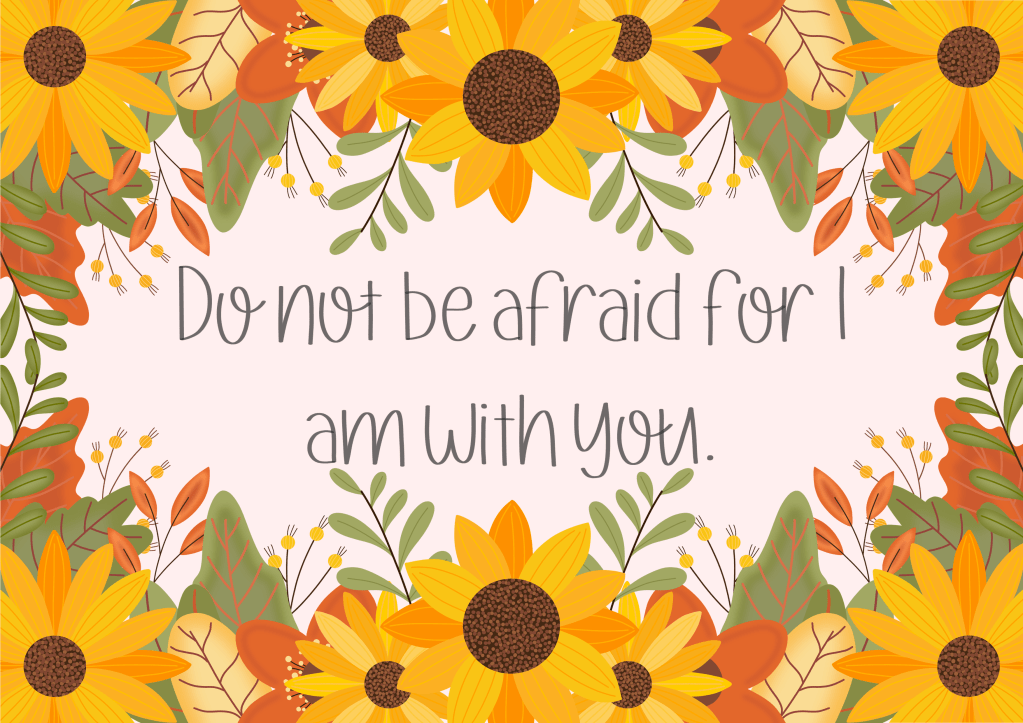
Have you ever had someone say to you, “It’s clearly not your time,” after a suicide attempt? If you have, you probably know how cliche it sounds. Those words can feel empty, as though they’re meant to close a conversation rather than open one. Yet, as much as I’ve resisted the phrase, I can’t deny the weight it holds in my own life. After surviving multiple attempts to die – despite every intention to leave this world – I’ve been forced to confront the possibility that those words might carry a truth I hadn’t been willing to see.

I’ve tried. Many times. In moments of despair, I’ve done everything within my power to end the pain. And every single time, something has stopped in from happening. Maybe it was an intervention of a friend, the police or hospital staff, or a twist of fate that kept me alive. Maybe it was sheer luck, or as I’ve come to consider more and more, maybe it was because it wasn’t part of the plan that God has for my life.

The idea that survival is part of a greater plan is as difficult to accept as it is to dismiss. If I believe that God has a purpose for my life – and some part of me does – then surviving when I was ready to die suggests that my story isn’t over yet. If my time had come, wouldn’t I have succeeded? Wouldn’t I finally have found that escape?

But believing in that purpose doesn’t make the pain vanish. If anything, it complicates things. I’ve found myself asking why God would keep me here, struggling, when I was so ready to let go. What possible reason could justify the agony that led me to those moments in the first place? It’s a question I don’t have an answer to – at least, not yet.

If you’re reading this, maybe you’ve asked yourself similar questions. Maybe you’ve also faced moments when death seemed like the only way out. And maybe, like me, you’re still here, unsure of why. Here’s the conclusion I’ve started to reach: survival might not feel like a gift in the moment, but it’s an invitation to keep going. To keep searching. To keep asking what’s next.

When I think about the times I’ve survived, I realise that those moments weren’t random. They were filled with small interventions – a text from a friend, a hug from a family member that I so desperately needed, the police turning up at exactly the right moment to stop me doing something I wouldn’t be able to undo. Those moments weren’t the answers to all my questions, but they were signposts pointing me toward something bigger.

Wrestling with God’s Plan

If you believe, as I do, that God has a plan for each of us, then the idea that “it’s not your time” takes on a heavier, more significant meaning. If God has kept me here through all of this, then it would stand to reason that my time to leave this world is not now – because if it were, I would be gone. Period.

But it’s hard to reconcile the pain and hopelessness that drive someone to attempt suicide with the concept of a loving God who is guiding everything. It can feel cruel. Why keep me here, God, if it hurts this much? Why not let me go when I was so ready, so certain?

I don’t know exactly what God’s plan for me looks like. But I’ve started to think that surviving is part of it. Being here, despite everything, is part of it. And maybe writing this, sharing this, is part of it too.

“It’s still clearly not your time” still sounds cliche to me. It probably always will. But maybe the reason it’s such a persistent phrase is because there’s a deep truth buried in it. If you’ve survived something you didn’t think you could survive, it’s worth considering that there might be a reason for that. Not in a shallow, sugar-coated way, but in a profound, weighty way that calls up to look deeper into our lives and our purpose.

So here I am, still trying to figure it all out. Still asking questions. Still frustrated. But also still here. And if you’re reading this, you’re still here too. Maybe that’s worth something. Maybe that’s worth everything.

‘But he said to me, “My grace is sufficient for you, for my power is made perfect in weakness.” Therefore I will boast all the more gladly about my weaknesses, so that Christ’s power may rest on me.” – 2 Corinthians 12:9

All my love,

Anna x

My Sepsis Story

In January this year I had sepsis and it was the most terrifying experience of my life. It wasn’t the first time I’ve had it but it was the worst. As people with Fowler’s Syndrome are at higher risk of infections due to catheters, it follows that we are also at higher risk of developing sepsis. I’m really fortunate that because I was already in hospital at the time, it was caught early because things could have been much worse.

On New Years Eve I started to feel incredibly unwell. At first I thought it might just be the start of a migraine because I’m often sick and more exhausted than normal when I feel one coming on. But when the nurse in my bay came to do my observations I could tell something was seriously wrong. She immediately went to call a doctor and within 5 minutes my bed was surrounded.

My blood pressure had absolutely tanked (my notes, which I later read, said that it was 61/30), my temperature was 41°c and despite being in bed my heart rate was 149bpm. My score on the National Early Warning Signs system was 12. They took bloods straight away, including blood cultures, and put me on continuous fluids. And when they looked at what my lactate level was they knew that they were probably dealing with septic shock. A normal blood lactate level is less than 2.0mmol/L (some sources say that it’s less than 1.0mmol/L) and mine had jumped to 23. My entire body felt like it was on fire and I was beginning to feel quite disorientated.

Whilst they waited for my blood cultures to come back I was put on 3 different IV antibiotics until they knew what one was most appropriate. The critical care outreach team came to see me and discussions were had about whether or not I needed to be moved to intensive care. I wasn’t tolerating my feed at all so it had to be stopped for a few days, and when I woke up on New Years Day, I had the worst headache I’ve ever experienced. If I thought the headache that was starting the day before was bad, it was nothing in comparison to this.

I genuinely felt like my head was going to explode. I couldn’t move at all – I couldn’t sit up, turn from side to side, and the bright hospital lights just made everything worse. This made the medics suspect that I might have meningitis, but once my blood cultures came back, they realised that it was ‘just’ being in septic shock. I’m pretty glad that I didn’t have to have a lumbar puncture – I was hours away from that being carried out.

The continuous IV fluids were carried on until my blood pressure had stabilised a little – it took 4 days before it was normal enough that I was allowed to stand up and walk to the toilet (that was about 5 steps in front of my bed), and the same before my temperature dropped below 40°C. The critical care outreach team came to see me 4-6 times a day whilst my NEWS was still so high.

I don’t think I’ve ever felt so unwell in my life. All I asked the doctors for the first few days was ‘am I going to die?’ because I really did feel like that was the likely outcome. And now, being a science nerd who likes to read research papers for fun, it’s made things even clearer in terms of how unwell I was. In all honesty, the severity of my symptoms was probably also, in part, due to malnutrition and having experienced refeeding syndrome the week prior to going into septic shock. My body was struggling a lot.

It took a good 4 weeks before I started to feel semi-human again (although I still wasn’t at my baseline) and what did my body reward me with? Sepsis take two. I wasn’t quite as unwell the second time around, which I’m very grateful for, but it’s still taken it out of me. I’m still not back at baseline, even 6 months later, and I’m anticipating a long road ahead of me, but I know I’m incredibly lucky to be in the position I am, because things could have been very different.

All my love,

Anna x

Behind Closed Doors

A question I’ve been asked a lot before is ‘what is life like on a psychiatric ward?’ and I don’t think there’s a description I can give that fully sums it up. It changes from ward to ward, patient group to patient group and things like ward dynamics, staff, type of ward and outside influences can change how things are dramatically. For example, the ward I’m currently on is in the process of being completely split into a male ward and a female ward so there is a lot of building work going on. This means that it’s loud, busy and often overwhelming. It has definitely impacted how this admission has been compared to when I was here 4 years ago. But I’ll try and describe what life can be like on wards – this is purely based on my experiences as a patient (and former staff member – I used to work as a HCA at a Priory hospital so I can comment based on that experience too). It’s also important to note that I am referring to acute wards (the most common type of ward) as this is the only kind of ward I have experience of – I am not talking about PICU, secure services, rehabilitation wards etc which all have very different presentations too.

This is fairly typical of modern bedrooms on psychiatric wards – obviously not all wards will look like this, but it was a picture that seems fairly in line with my experience of wards.

Thinking about psychiatric wards can feel like you step into a world that is covered in a veil of mystery, yet also stigma. Patients are kept behind locked doors and, unless you are admitted yourself, or are visiting someone on a ward, things are neatly hidden away. That is, unless a patient absconds, but that’s a whole other kettle of fish and something I’ll leave for another day. So what is life like behind these closed doors? Psychiatric wards serve as a safe space for individuals experiencing mental health crisis and offer a degree of support and treatment for a wide range of mental health conditions. The experience of life on a ward varies hugely from patient to patient, especially as we are all so unique and are all presenting in different ways, yet there are some common threads that tie the experience together.

I think one of the biggest misconceptions about psychiatric wards is that you go in unwell and come out better. On NHS wards in particular there is a big absence of therapeutic work available to patients as this kind of long-term work typically comes in the community (or rehabilitation wards such as those that specialise in trauma therapy or DBT). It’s not that common for wards to have regular therapeutic interventions from psychologists, although in some cases this does happen. I, for example, have just been offered 4/5 weeks of weekly sessions with a psychologist to complete a formulation that will hopefully help to prepare me for discharge. However, the therapy that I really need – trauma work – will come when I am in the community and stable enough to fully engage in it. Patients will typically be discharged once they have stabilised to a degree that they are no longer in acute crisis, but this does not mean that they are well, or even that they are stable by ‘normal’ standards – they are stable enough to be discharged.

Often there is an activities programme put together by the activity coordinators and occupational therapists that work on the ward and this can provide a welcome distraction from the mundane life that patients are forced to experience. This can include things like film nights, cooking sessions, baking, playing games, having coffee mornings, having access to an art room and visits from PAT dogs (I did, of course, save the best until last!) They may also offer things like mindfulness sessions and individual sessions with OT’s to work on individual goals. Programmes like this do help as they engage patients to a degree and get them used to regularly engaging in groups, as well as mixing with other patients (something I’ll come to in a minute). Engaging in groups also shows the MDT that you are working with staff and will work in your favour when it comes to things like requesting leave and, eventually, discharge.

One of the ‘nicest’ aspects of life on a psychiatric ward is the opportunity to make connections with other patients – after all, you are spending all day, every day in the same, fairly confined, space and so you do often get to know each other quite quickly. This isn’t always the case, though, as it does depend on the patient group at the time and how well you ‘gel’ with other patients. However, when connections are forged, they are often deep and meaningful. After all, you understand the difficulties of being in crisis and what life is like with mental illness, may have similar diagnoses, and can empathise with the difficulties of being stuck on a ward, shut away from the outside world. There’s also the opportunity for peer support, as patients can share their experiences and give advice based on situations they have found themselves in – I know I find it much more reassuring when I’m hearing things from someone who truly understands what my life can be like as there is that empathy underlying the discussions.

I was actually having a discussion with a patient the other day. We are fairly similar in age which is always nice, and seem to have a good relationship despite only knowing each other for a matter of days. We were sat in the quiet lounge (trying to escape the hectic nature of the ward at the moment – building work and loud patients aren’t always the best combination for two individuals who need to have quiet time!) and got chatting about our lives and how we ended up on the ward. And as each of us spoke, we found it really easy to slip in different pieces of advice, as well as stories from our lives to hopefully encourage the other. This isn’t always how things happen on wards, however, but it’s a nice bonus when it does!

Something that I think is probably fairly common, yet also not, across wards is the sense of rigidity and routine – it can often feel like there is no routine or structure on a ward, and whilst that can be the case at times, when you take a step back and look at the day as a whole you will find that there is actually a lot of routine and structure. Medications are given at the same time (roughly) daily, meals are always at the same time, groups tend to happen at the same time each week and you have your ward round at the same time weekly as well. When you aren’t able to engage in groups or they aren’t available it definitely feels like there is no structure at all – you seem to aimlessly float around, maybe sitting in the communal area for a change of scenery, but certainly not feeling like there is any semblance of structure to your day. But some of this does give patients a feeling of predictability and order – they know their meds are coming or that lunch is coming up – in a world that can feel so unpredictable and messy.

I could probably go on and on with stories from my admissions, comparing different wards and just generally rambling, but  I’ll draw to a close here. Overall, life behind the closed doors of a psychiatric ward is a complex, interconnected web with so many different threads that draw together. It can vary so much from place to place or time to time but I think that the overall aim is for wards to be places of safety for people experiencing crisis where they can stabilise to a degree before returning to ‘normal’ life to continue their recovery. I hope that by talking about the reality of life on a psychiatric ward it can do a few things: dispel some of the myths and misconceptions that people might have, shed some light on what life is really like whilst an inpatient on an acute adult psychiatric ward, and also foster greater empathy, compassion and support for those who are struggling with their mental health. Whilst we have made great improvements in the understanding and acceptance of mental health in recent years, there is still a lot of stigma that needs to be removed and it is talking that will help to lessen this stigma even more. 

All my love,

Anna x