An Invisible Battle: How Chronic Illness Affects Mental Health

Living with a chronic illness is like trying to work your way through the maze from Harry Potter and the Goblet of Fire – there are new obstacles at every turn, and just as you think you know where you’re going a dead end springs up in front of you and you have to try and start again. Whilst the physical impacts of chronic illness can, at times, be readily apparent, the impact that illness has on your mental health is often overlooked. It’s a complex interaction – an invisible battle that so many people face daily.

One defining characteristic of many chronic illness is their invisible nature, leaving no outward signs of the suffering that goes on. As a result of this many individuals living with chronic illness struggle with feelings of isolation and invalidation. There is often a huge psychological toll because of this, especially when there are attitudes of disbelief from others as they struggle to understand the extent of the pain and suffering that goes on below the surface. This lack of understanding is something that increases feelings of alienation, which just adds to the psychological impact that chronic illness has.

Something that I really struggled with, and, if I’m being honest still struggle with, has been the loss of my previous life. The loss of many things that felt like ‘Anna’. The loss of my degree, the job I had, the hobbies I enjoyed. I could suddenly no longer study or work, and things like running and going to the gym were unattainable because of the harsh limitations that were so quickly imposed on my life. And I know that this is something that so many other people struggle with too. As well as the loss of life, the stigma that accompanies chronic illness also impacts our self-esteem. We live in a society that values busyness and speed, productivity and independence. It becomes easy to internalise these messages, and to feel like everyone else is living their best life, which can exacerbate struggles with our mental health. 

And chronic illness life is STRESSFUL. That might be the understatement of the year. We have to deal with symptoms, flares, appointments and treatment, as well as the questions about the future that hang over us. Experiencing unpredictable symptoms and  flare ups is something that definitely makes me feel out of control. I really struggle with not knowing if things will get better or worse, and wish that I could somehow control everything in my own way (yes, I am a control freak and perfectionist and probably always will be). It becomes easy to feel like you’re constantly watching your back, trying to anticipate the next wave of symptoms that will appear. And this is exhausting, both physically and emotionally. The never ending feelings of stress have been studied and shown to contribute towards anxiety, depression and other mood disorders.

However, whilst it’s true that there is little those with chronic illness can do to ease the challenges that they face, dealing with these challenges day in, day out, means we also start to become very resilient people. And the more resilient we become, the more we can accept what is going on in our lives which can make the mental toll feel lighter. Additionally, this resilience can help us to try and develop a strong support network, trying to seek out others who understand what life is like, who make us feel less alone in our journey. 

Trying to reach out of help from others is something that’s really difficult, yet also something that everyone should try to do. It can be invaluable in providing additional support for the emotional impact that chronic illness causes. Engaging in therapy or counselling can help you develop skills and coping mechanisms that will help you in the day to day struggles, and support groups can give connection and help you form relationships with people who truly get it. All of this can also help you begin to feel more compassionate towards yourself, can help push you more towards acceptance of your situation.

Living with chronic illness is a journey full of obstacles, but is also testament to the resilience of those who struggle. It’s completely understandable that having a long-term illness has a big impact on mental health and can cause huge struggles – I think anyone who suddenly lost their sense of self and their previous life would start to struggle too. 

Finally, to anyone trying to navigate the unpredictability of chronic illness life, remember this: your struggles are valid, people do see your pain (and are exactly the kind of people you need in your life), and you have more resilience than you think you do. You are not defined by your illness, even when it dominates your life, but by the courage that you show when you get up and face life day after day.

All my love,

Anna x

Behind Closed Doors

A question I’ve been asked a lot before is ‘what is life like on a psychiatric ward?’ and I don’t think there’s a description I can give that fully sums it up. It changes from ward to ward, patient group to patient group and things like ward dynamics, staff, type of ward and outside influences can change how things are dramatically. For example, the ward I’m currently on is in the process of being completely split into a male ward and a female ward so there is a lot of building work going on. This means that it’s loud, busy and often overwhelming. It has definitely impacted how this admission has been compared to when I was here 4 years ago. But I’ll try and describe what life can be like on wards – this is purely based on my experiences as a patient (and former staff member – I used to work as a HCA at a Priory hospital so I can comment based on that experience too). It’s also important to note that I am referring to acute wards (the most common type of ward) as this is the only kind of ward I have experience of – I am not talking about PICU, secure services, rehabilitation wards etc which all have very different presentations too.

This is fairly typical of modern bedrooms on psychiatric wards – obviously not all wards will look like this, but it was a picture that seems fairly in line with my experience of wards.

Thinking about psychiatric wards can feel like you step into a world that is covered in a veil of mystery, yet also stigma. Patients are kept behind locked doors and, unless you are admitted yourself, or are visiting someone on a ward, things are neatly hidden away. That is, unless a patient absconds, but that’s a whole other kettle of fish and something I’ll leave for another day. So what is life like behind these closed doors? Psychiatric wards serve as a safe space for individuals experiencing mental health crisis and offer a degree of support and treatment for a wide range of mental health conditions. The experience of life on a ward varies hugely from patient to patient, especially as we are all so unique and are all presenting in different ways, yet there are some common threads that tie the experience together.

I think one of the biggest misconceptions about psychiatric wards is that you go in unwell and come out better. On NHS wards in particular there is a big absence of therapeutic work available to patients as this kind of long-term work typically comes in the community (or rehabilitation wards such as those that specialise in trauma therapy or DBT). It’s not that common for wards to have regular therapeutic interventions from psychologists, although in some cases this does happen. I, for example, have just been offered 4/5 weeks of weekly sessions with a psychologist to complete a formulation that will hopefully help to prepare me for discharge. However, the therapy that I really need – trauma work – will come when I am in the community and stable enough to fully engage in it. Patients will typically be discharged once they have stabilised to a degree that they are no longer in acute crisis, but this does not mean that they are well, or even that they are stable by ‘normal’ standards – they are stable enough to be discharged.

Often there is an activities programme put together by the activity coordinators and occupational therapists that work on the ward and this can provide a welcome distraction from the mundane life that patients are forced to experience. This can include things like film nights, cooking sessions, baking, playing games, having coffee mornings, having access to an art room and visits from PAT dogs (I did, of course, save the best until last!) They may also offer things like mindfulness sessions and individual sessions with OT’s to work on individual goals. Programmes like this do help as they engage patients to a degree and get them used to regularly engaging in groups, as well as mixing with other patients (something I’ll come to in a minute). Engaging in groups also shows the MDT that you are working with staff and will work in your favour when it comes to things like requesting leave and, eventually, discharge.

One of the ‘nicest’ aspects of life on a psychiatric ward is the opportunity to make connections with other patients – after all, you are spending all day, every day in the same, fairly confined, space and so you do often get to know each other quite quickly. This isn’t always the case, though, as it does depend on the patient group at the time and how well you ‘gel’ with other patients. However, when connections are forged, they are often deep and meaningful. After all, you understand the difficulties of being in crisis and what life is like with mental illness, may have similar diagnoses, and can empathise with the difficulties of being stuck on a ward, shut away from the outside world. There’s also the opportunity for peer support, as patients can share their experiences and give advice based on situations they have found themselves in – I know I find it much more reassuring when I’m hearing things from someone who truly understands what my life can be like as there is that empathy underlying the discussions.

I was actually having a discussion with a patient the other day. We are fairly similar in age which is always nice, and seem to have a good relationship despite only knowing each other for a matter of days. We were sat in the quiet lounge (trying to escape the hectic nature of the ward at the moment – building work and loud patients aren’t always the best combination for two individuals who need to have quiet time!) and got chatting about our lives and how we ended up on the ward. And as each of us spoke, we found it really easy to slip in different pieces of advice, as well as stories from our lives to hopefully encourage the other. This isn’t always how things happen on wards, however, but it’s a nice bonus when it does!

Something that I think is probably fairly common, yet also not, across wards is the sense of rigidity and routine – it can often feel like there is no routine or structure on a ward, and whilst that can be the case at times, when you take a step back and look at the day as a whole you will find that there is actually a lot of routine and structure. Medications are given at the same time (roughly) daily, meals are always at the same time, groups tend to happen at the same time each week and you have your ward round at the same time weekly as well. When you aren’t able to engage in groups or they aren’t available it definitely feels like there is no structure at all – you seem to aimlessly float around, maybe sitting in the communal area for a change of scenery, but certainly not feeling like there is any semblance of structure to your day. But some of this does give patients a feeling of predictability and order – they know their meds are coming or that lunch is coming up – in a world that can feel so unpredictable and messy.

I could probably go on and on with stories from my admissions, comparing different wards and just generally rambling, but  I’ll draw to a close here. Overall, life behind the closed doors of a psychiatric ward is a complex, interconnected web with so many different threads that draw together. It can vary so much from place to place or time to time but I think that the overall aim is for wards to be places of safety for people experiencing crisis where they can stabilise to a degree before returning to ‘normal’ life to continue their recovery. I hope that by talking about the reality of life on a psychiatric ward it can do a few things: dispel some of the myths and misconceptions that people might have, shed some light on what life is really like whilst an inpatient on an acute adult psychiatric ward, and also foster greater empathy, compassion and support for those who are struggling with their mental health. Whilst we have made great improvements in the understanding and acceptance of mental health in recent years, there is still a lot of stigma that needs to be removed and it is talking that will help to lessen this stigma even more. 

All my love,

Anna x

It’s Been a While

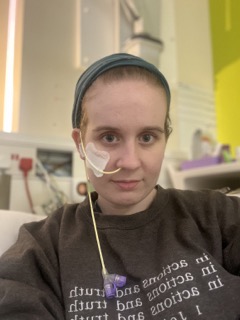
I don’t have many photos from the last few months but this is one of the happier ones, one where I was starting to feel a little more content with the situation at that time.

It’s been a long time since I’ve posted on this blog, and so much has happened in my life – I could write for days about it all, but I’ll spare you. I thought, to ease myself back in, I’d share something I recently posted on Facebook – a testimony of sorts. It’ll give you some insight into where I disappeared to and the kind of things that have been going on. So here you are… enjoy!

(This post includes topics of suicide, hospital and acute illness (both physical and mental) so please don’t read on if this might affect you negatively in any way!)

It’s been a little over three months since I was admitted to hospital, yet it feels like a lifetime ago since the police intervened and took me to the local Place of Safety.

It’s a weird one, being suicidal and wanting life to end, whilst also believing in truths from the Bible such as the familiar verse, Jeremiah 29:11 where we’re told “For I know the plans I have for you,” declares the Lord “plans to prosper you and not to harm you, plans to give you a hope and a future.” Those things are seemingly in contradiction with one another – because if I believe what God has to say, all of this is somehow part of his plan and I need to wait and see how it all slots into place. It’s just hard holding on to that when your mental health is at rock bottom as it feels like something that has to be so far removed from God’s plan for life. I know he doesn’t get pleasure out of it, that it breaks his heart when we are in situations like this – so why do we end up in them? It’s difficult to wrap your head around.

Just after Christmas I was transferred from the Psychiatric Hospital I was sectioned to, to the local general hospital. I was pretty physically unwell – depression has ruined my appetite lately and I’ve found it near on impossible to eat anything. When I was moved I had extremely low blood sugar and was ketoacidotic. And very soon the conversation turned to NG feeding. Most of you will know that I have a difficult history with tube feeding – I spent 6 months back in 2019 with an NG tube being fed against my will and it was the most traumatic, difficult 6 months of my life. When they bought it up I prayed ‘God, I can’t do this again. I need a sign that you’re here with me.’ Nothing. I carried on praying this over the next couple of days, even more so when the NG tube was placed. Still nothing.

On day three of NG feeding the doctors came round to see me and told me I had refeeding syndrome. This is when your body tries to metabolise nutrients again but there are severe shifts in body chemistry which are related to electrolyte deficiencies. It caused a whole host of problems for me including low phosphate levels, low magnesium levels, low potassium levels and caused symptoms including muscle weakness, nausea, abnormal heart rhythms, fatigue, muscle cramps and low blood pressure. Again, I prayed ‘why, God? I really can’t do this.’ Again, I got nothing.

But the icing on the cake for me, was on New Years Eve. All of a sudden I began to feel incredibly unwell, completely out of the blue. My temperature shot up to 40.3, my blood pressure dropped dangerously low and I felt like my heart was going to come out of my chest. Doctors came to see me and said that they suspected that I had Sepsis which, by that point, I think I thought as well. I was seen by the Intensive Care Outreach team multiple times a day and 2 days later my blood cultures came back showing that I did, in fact, have Sepsis again. I don’t think I’ve ever felt so unwell – I had the worst headache that radiated down to the bottom of my neck and for 3 days I couldn’t move at all. My blood pressure refused to come up and I was still spiking fevers. I continued to pray ‘God, I really need that sign because this just feels like one thing after another and I really need a break.’ Yet still there was nothing.

Then, as I was starting to feel a little more human I spoke to one of the hospital chaplains (and by spoke to, what I really mean is sobbed at). We had a really good chat and I explained that I’d spent the last 2 weeks asking God for a sign because it was the one thing I really needed. She asked me if I knew of the poem ‘Footprints in the Sand’ which I do. And all of a sudden things started to slot into place. She reminded me that the poem says “The times when you have seen only one set of footprints, my child, is when I carried you.” So, that set me off into a crying mess again. Because that was my sign. Later that day, as I lay in bed I prayed, only this time it was different as all I could say, over and over again, was ‘God, thank you for carrying me through.’

Things aren’t somehow better now, I’m still struggling and still sectioned in hospital but I remind myself every day that even though things are hard, God is carrying me and will continue to carry me. And my prayer is still ‘God, thank you for carrying me through.’

All my love,

Anna x

What People Experiencing Chronic Pain Want You To Know

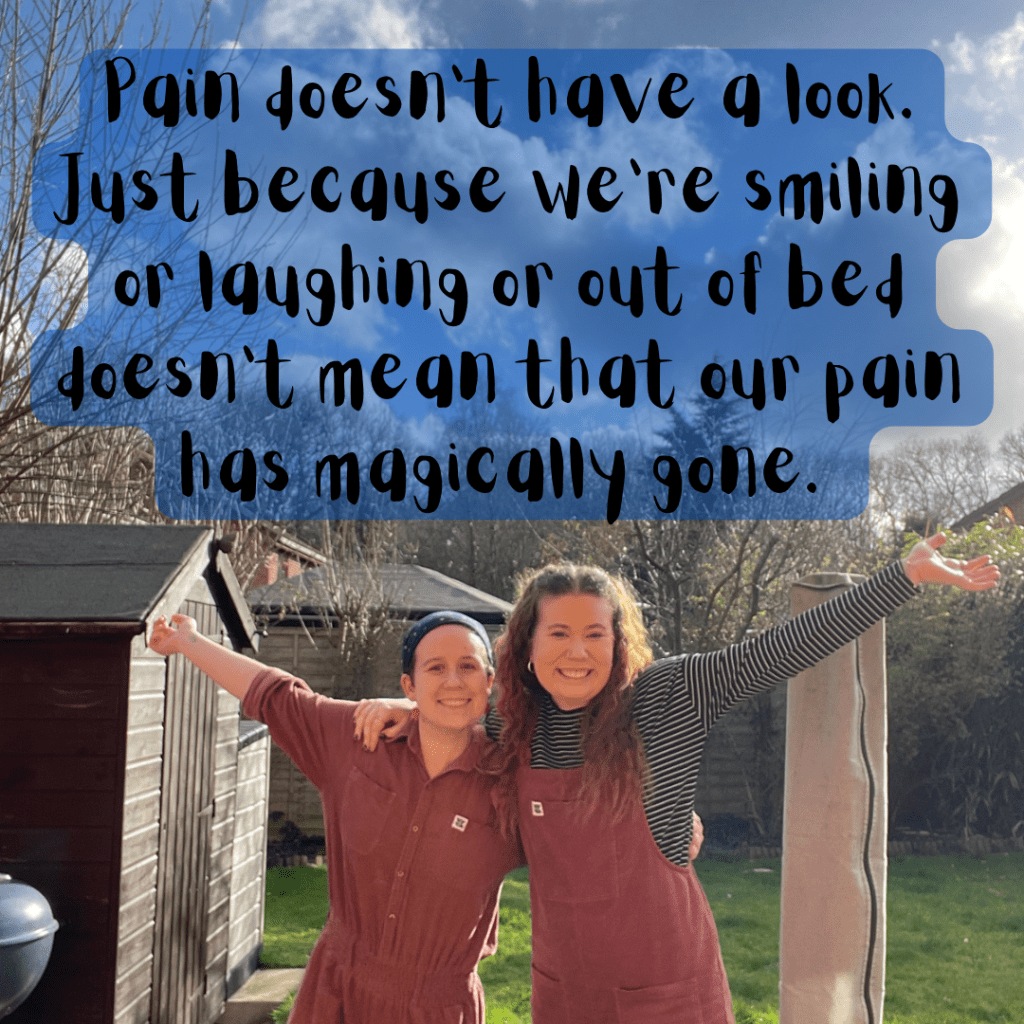
  1. Looking fine doesn’t mean we are fine – whilst we might look like we are fine and like we are not in pain, trust us… we are still in pain. It takes a lot of time and effort to try and come across like we function normally in spite of the pain. We might say we’re fine, but usually we’re not – it’s just easier to try and hide it. 
  2. We’re not lazy, we are exhausted – dealing with pain day in, day out, is a tiring thing to do. It might look as though we sit around a lot and don’t get a lot done, we might come across as being lazy, but things are very far removed from that. We beat ourselves up enough about what we can’t do, and really don’t need other people piling on pressure too. Dealing with constant pain is exhausting, it takes a lot out of you. 
  1. We’re very good at feeling guilty – having chronic pain doesn’t just cause physical pain, it can also cause emotional pain as well. We feel guilty when we can’t go out or have to cancel plans because of pain, we feel guilty when we eat or drink something that could trigger our pain, we feel guilty when we have to rest and take time out to manage our pain better. It can turn into a vicious cycle. 
  2. Lots of us will have been treated like drug addicts – please don’t be ‘that’ person. Chances are you mean it as a joke, but I’ve had so many arguments with doctors about pain and how they think I’ve abused medication in the past (which isn’t true) and I’m tired of jumping through their hoops. No one should face barrier after barrier to get treatment that might help them. 
  1. Pain changes everything about our life – there are the really obvious changes, and the not so obvious changes. We have to adapt the basic things like household cleaning or food shopping, to fit in with our pain and what we can manage. It’s definitely a balancing act. 
  2. We’ve been accused of faking – please don’t be someone who accuses us of faking it too. We know it’s invisible, we wish it was more obvious at times because if people could physically see the impact it had I can guarantee that they wouldn’t be calling us out as ‘fake’. 
  1. Please don’t ask us when we are going to get better – chronic pain is often a permanent condition. It might be hard to fathom life with something causing pain forever but that is the reality for a lot of us. People expect to see progress and that hurts because they’re pinning their hope on something that probably won’t come to fruition.  
  2. Our pain tolerance is often pretty high – this means that when I say I am in pain, I am in pain. And a lot of it. I function every day with high levels of pain that I never imagined being able to withstand but over time it has just become a part of my life that I have to deal with. 

All my love,

Anna x

When You Feel Like You’re Climbing Mountains

An analogy that I’ve always loved to use, yet somehow pushed down to the bottom of my mind, is this: recovering from an eating disorder is like climbing a mountain. You might start off great and feel like you have everything going for you but the more you climb the more tired you become. It’s hard work. You’ll want to turn around and begin the descent multiple times – it feels like the easy option, the one thing you know how to do: returning to your eating disorder. But if you persevere and keep on climbing, even when everything in your body is screaming at you to stop, you’ll eventually reach the top of the mountain. And when you do you can look out over the amazing view and finally say “I made it!”

To those who know me well, you’ll know that I have a love for Grey’s Anatomy. I am bloody obsessed with it. And it was, of course, a quote from Grey’s that reminded me of this analogy last night. Meredith says:

They take pictures of mountain climbers at the top of a mountain. They’re smiling, ecstatic, triumphant. They don’t take pictures along the way ‘cos who wants to remember the rest of it. We push ourselves because we have to, not because we like it. The relentless climb, the pain and anguish of taking it to the next level. Nobody takes pictures of that. Nobody wants to remember. We just wanna remember the view from the top. The breathtaking moment at the edge of the world. That’s what keeps us climbing. And it’s worth the pain. That’s the crazy part. It’s worth anything.

And all I could think about was how true this is when applied to recovery. It doesn’t necessarily have to be recovery from an eating disorder either, it could be recovery from an addiction, from PTSD, perhaps something physical. Once you reach the top of the mountain, once you recover, you get that breathtaking moment where you realise that the pain was worth it, the fight was worth it, every tear you shed and the horrible moments you endured… they were all worth it.

So if you’re currently climbing your mountain and want to turn back, return to the bottom, back to what is familiar… remember that nothing can compete with the feeling you’ll get at the top. It’s hard but oh my gosh is it worth it!

All my love,

Anna x

Dear Body

The following post is a poem that I published in my collection ‘Mending the Broken’ and will never not like reading back to myself when things feel hard. It’s a letter to myself, apologising for the things I have put my body through and promising never to let myself go back to that place. It’s incredibly easy to look back on your life with rose-tinted glasses on – and I feel like it is something I struggle a lot with in relation to my history of Anorexia Nervosa – my brain dislikes being reminded of the reality of how life was back then. So this is a post for me as much as it is for you.

Dear body, I’m so sorry.
Sorry for the way I’ve treated you,
For the torture you’ve endured
At the hands of me.
The respect that I withheld you,
For the acceptance I never gave you.
I am so, so sorry.

Dear arms, I’m so sorry.
Sorry for the pain I have inflicted,
For the marks I have left,
And the scars you now bear.
You do so much for me,
Allow me to write and hug (and so much more).
I’m so, so sorry.

Dear legs, I’m so sorry.
Sorry for calling you names,
And for hating you with all my being.
For trying to shape you into something else,
Rather than accepting you
And being grateful you are there.
I’m so, so sorry.

Dear stomach, I’m so sorry.
Sorry for calling you flabby and fat
And for being ashamed of you.
For refusing to accept that you’re perfect,
And have done more than I could ever imagine.
You protect my organs and keep me safe.
I’m so, so sorry.

If I didn’t have a body,
Then there wouldn’t be a me.
I need you.
I need you to be me.
So today is the day I start to treasure you –
To treat you with respect.

I know I am not perfect,
That society will always tell me I can change.
But even though I’ll never be perfect to the world,
I can be perfect to me.
So, body, I am so, so sorry.
You are beautiful and always have been
And you will always be beautiful to me.

All my love,

Anna x

‘Everyone is living their best life… except me’

I think this is a pretty common feeling that most people have at one point or another through their life. We look at the social media profiles of friends and family and feel like everyone else is on top of their game, knows what they are doing and is living their best possible life. It can seem as though everyone around us is moving forward whilst we are stagnated, stuck in a little bubble watching the world around us. So from the off I feel it’s important to say that this isn’t true – social media is a highlight reel and only shows the parts of life that we want people to see. We’re not all living our best lives, we’re just showing others our best lives – no one wants to post about the crying and the anxiety and the days when getting out of bed is impossible. So we don’t – but that doesn’t mean that those days aren’t happening.

We live in such a competitive world, where progress seems to be one of the main measures of how well we are doing in life. Where we see others’ progress and pit it against our own. Yet the only thing that truly matters is that we are running our own race, not trying to match up to others who aren’t in our shoes. It’s like trying to run a marathon in someone else’s trainers when they’re two sizes too small – it’s not going to end well. But when we wear our own trainers, that we’ve trained in for months, things will turn out much better.

It might be that you are on a different path to the one you think you’re on – everyone has an individual path to follow, and yours might not look how you expect it to. Maybe all you friends are getting married or having kids and that’s the path you think you should be on, but it might not be. Your time to get married and have kids, or to go for a promotion at work, might not be the same time as it is for others in your life. There’s no template to follow in life, it’s not a one size fits all kind of situation – it would be pretty boring if it was!

Here are some tips for living your best life, right where you are, now.

  • Try to find your place and your purpose – what things are you good at? What do you enjoy? How can you combine the two together to bring you something that you feel gives you purpose? I’m not pretending that it’s an easy thing to do, nor that it is something that is a quick step to take, but it’s such a fulfilling way to bring purpose to the day to day.
  • Be appreciative of the things that you have, rather than the things you wish you had. Try not to look at what other people have either, remembering that your path is different.
  • Make a plan and stick to it, keeping in mind your end goals. Don’t let other people pressure you into making decisions that aren’t right for you.
  • Remember the importance of setting boundaries – you don’t have to be a people pleaser and always say ‘yes’ to people, sometime’s saying ‘no’ is exactly what you need to do. Setting and maintaining boundaries is the healthy thing to do! Michelle Elman is an absolute boundaries Queen and has written a great book called ‘The Joy of Being Selfish’ which such a valuable read.
  • Try to stop worrying about what others thing about you – again, not an easy thing to do as we’re conditioned to find value and worth in other people’s opinions of us, but once you stop caring about what other people think, it gives you such freedom to be authentically you!
  • Focus on the little things and notice the good in them. I like to try and write down three positives from each day, no matter how crappy the day has been. It doesn’t matter if it’s huge like ‘I ticked off my number one bucket list activity’ or ‘I watched a programme on Netflix that made me laugh’ – positives are still positive no matter how big or small they may seem.

Even when it feels like your life is stagnant and has come grinding to a halt, I can promise it hasn’t – every day that you wake up is a day that your life is moving forward. When we look back at where we started it can be easier to see the distance that we have travelled – even if looking forward it looks like we still have such a long way to go. So, remember, your path is the path that matters – even if it isn’t quite how you expect!

All my love,

Anna x

Top 5 Books of 2022

Reading has always been an escape for me. I’ve always been an avid reader – many of my earliest memories involve me with my head stuck in a book (often sat outside my parents bedroom door on weekend mornings waiting for them to wake up) and I have such fond memories of spending time in libraries… I think I always aspired to be a bit of a real life Matilda! And as an adult, spending a lot of time in hospital both for my mental and physical health, has provided me with a lot of time to get stuck back into books again. I’ll never forget the first book that I was able to read again after a period of being too malnourished to focus on anything – it was such a welcome escape from life on the ward and the difficulties that I was facing.

This year I set myself the goal of reading 50 books – I thought that would be quite a big challenge for me and yet, I managed to surpass that goal and ended up reading 88 books (89 if I finish my latest read today!) According to my Goodreads summary I have read 31,375 pages which is mind boggling! I’ve seen a lot of people summing up their top five books from the year recently which has inspired me to go back over my list and revisit some of my reads from the last 12 months.

Top 5 Books:

  1. Verity, Colleen Hoover

    I absolutely loved this book! I’d only heard of Colleen Hoover through TikTok (so many of my reads this year have been booktok recommendations) with the rave reviews that came from ‘It Ends with Us’ which was another great read, however, ‘Verity’ hands down beat it for me. In some ways it was an incredibly predictable plot line, that seemed to follow a path that I was roughly expecting. However, in other ways, the ending was so far removed from anything I was expecting that it absolutely blew my mind. The shock of the ending far surpassed any of the more predictable elements for me!

  2. The One Hundred Years of Lenni and Margot, Marianne Cronin

    This book made me laugh and cry in equal measure. It followed the experience of a 17 year old on a hospital ward for people with terminal and life limiting illnesses who meets Margot, an 83 year old, in a hospital art class. I think I related a lot to the relationship between the two – because when you are in hospital for a prolonged period of time, it’s only natural that you start to form relationships with other patients. It got me thinking about patients that I’ve met who, sadly, have passed away, and those whom I still speak to on a regular basis. It felt like such a wholesome read and is definitely one of those books that I’d wipe from my memory simply to have the joy of re-reading it again.

  3. How to Kill Your Family, Bella Mackie

    I’d heard so much about this book before reading it – again, it was another booktok read that I had seen on a table in Waterstones and was intrigued by the title. There was a lot of character information throughout that did take me a while to get into, but overall I’m glad that I stuck with it! I kind of imagined that it was going to be the kind of book that took me through Grace trying to prove her innocence, however, I soon learned that, whilst she may not have been guilty of the murder she had been sentenced for, she was not quite as innocent as she may have seemed at first. It was a witty, enjoyable read and one that I will continue to recommend.

  4. The Joy of Being Selfish, Michelle Elman

    Wow. Just wow. This is a book all about boundaries and why we need them. Michelle is sometimes referred to as the Queen of Boundaries and I can see why. I listened to this on Audible (which has been an amazing way to have a different kind of book experience on days when I can’t focus enough on a physical book) and very quickly ordered myself a paper copy so that I could refer back to ‘must-read’ sections later. I think I’ve always kind of wondered why people have seemed to, at times, walk all over me at various points of my life, and this book opened my eyes to the whole concept of setting boundaries. I don’t think I ever really realised what a boundary was, nor that I was well within my rights to set them for myself. Listening to this book marked a clear turning point in terms of my ability to advocate for myself and set boundaries that I’ve never done before! It’s certainly something that I’ll come back to time and time again as and when I need to.

  5. The Primrose Railway Children, Jacqueline Wilson

    I was so excited to read this as ‘The Railway Children’ is one of my childhood faves and it did not disappoint. I needed something that was easy to get stuck into after reading a few too many deep books at once, and it certainly fitted all the boxes. I try to read books that are aimed at children every so often because it still feels satisfying to add them to my Goodreads list. It’s not a story that is too similar to the original that it is replicated exactly as was, but it is similar enough that you can still see the inspiration shine through. And Wilson delicately addresses what Autism is and brings in elements including the importance of speaking about mental health in a way that is perfect for younger readers.

I hope 2023 is full of lots of great books for you!

All my love,

Anna x

Fowler’s Syndrome Download

Something that I knew I wanted to incorporate into my blog/site was downloadable resources to help people explain their condition to others or to try and make appointments feel easier and so I thought I’d post a the first one that I created – I initially printed this to give to the District Nursing team in my area so that I didn’t have to explain myself repeatedly. They’re all absolute angels but it gets difficult when you don’t know who is coming and I get quite upset when I have to explain my situation repeatedly and so this seemed like a perfect alternative! It is stuck at the front of my folder and on my online notes for the team so that they can see a little about what I have to deal with daily, and know what Fowler’s actually is. And it’s been perfect – pretty much everyone that has been out to me over the last 18 months has read the information and, not only do I have catheter changes with no awkward questions, but they’ve also learned something more about a condition that is rarely heard of!

Hopefully you’ll be able to see the document and download it from here but if my previous post is anything to go by (here) I may not have fully grasped how technology works – so let me know if there are any issues! If you have Fowler’s Syndrome or are a medical professional, or if you know someone who is or just want to know more, please, please, please share this PDF! I’m trying to spread the word about Fowler’s as much as possible because awareness can’t harm us, right?! So feel free to save it or download it or print it – use it in any way that helps!

All my love,

Anna x

Cultivating an Attitude of Gratitude

(Apparently I didn’t grasp the whole ‘scheduling posts’ thing correctly like I thought I had…. So this has been sitting in my drafts for nearly two months – whoops!)

When I started this blog, I decided I was going to keep a list of blog ideas saved on my laptop. One of those ideas was to write something about gratitude – I had the title ‘An Attitude of Gratitude’ saved on my list and then later changed it to ‘Cultivating an Attitude of Gratitude’ yet when I looked back over my list later, I thought it was such a cliché, cheesy title for a post and I pushed it to the bottom without much thought. However, over the last week or so I have seen SO many posts on Instagram in particular around this theme. I follow a lot of lettering, positive quote type accounts and posts have been popping up left, right and centre, and so I decided to take it as a sign that maybe the post wasn’t as cheesy as I thought it was.

There’s an entire branch of Psychology known as ‘Positive Psychology’ – and in Positive Psychology research, gratitude is strongly associated with greater happiness. It helps people feel more positive emotions, relish good experiences, improve health and deal with adversity. Whilst we cannot establish a cause-and-effect relationship on gratitude and well-being, most studies on the topic have suggested a strong link! There are other studies suggesting that gratitude can also improve relationships between people and, actually, people felt more comfortable expressing their concerns about their relationship – as well as causing people to feel happier overall about the relationship.

When we have an attitude of gratitude, we begin to appreciate everything in life – even the little things. It’s not that everything we have is great and lovely and that life is all sunshine and rainbows, but more that despite the rubbish that also goes on, they purposefully make a conscious decision to be thankful. There are so many ways that we can try to cultivate this kind of grateful attitude – and actually a majority of them are relatively small steps that we can make in our daily lives.

So, how can we cultivate an attitude of gratitude in our life?

  1. Try to keep a gratitude journal – make a conscious effort to try and choose between three and five things every day that you are grateful for. They can be small things like ‘I got to read some of my book’ or ‘I went out for coffee’, or they can be bigger things like ‘I got to spend time with my family’ or ‘I had a good therapy session that really helped me’. It can be hard to try and pick out the positives when life feels crappy, but I can guarantee that there are little things in every day if you look hard enough. Sometimes my list simply reads ‘I stayed alive, opened my curtains and got dressed’ – seemingly small things that most people probably do without thinking about, but that can be excruciatingly hard when you’re struggling with depression.
  2. It’s sometimes nice to write thank-you letters: both to other people in your life, but also to yourself. It’s always nice to know that someone appreciates you, and so if there is someone in your life that you don’t think you say thank you to enough, try writing them a letter – I can guarantee it will make their day! There’s something cathartic about writing, and it’s something that the recipient can keep and look back on. Once in a while it can be nice to also write yourself something too!
  3. Meditation is a great way to focus on the present without being judgemental. Having mindful moments might sound like such a stereotypical mental health team type suggestion, but there is so much research that suggests that being mindful, and meditating is a great way to improve your mental health. Spend some time being mindful about and meditating on the things in your life that you are grateful for.
  4. If you feel like writing down daily positives or things, you are grateful for is too big an ask (completely understand if you feel this way – I did for a long time and it took me months before I was able to consistently manage my list on a daily basis) then give a weekly list a go. Try to spend some time every week writing down the things that have happened that you are grateful for – I always do mine on a Sunday evening as it feels like a nice end to the week.
  5. Making a gratitude jar might sound like an extra cheesy, school type activity but when you reach the end of a year and can look through all your moments that you’ve been grateful for, it is an incredibly humbling and positive experience. It helps you to realise that there have been more positive moments than you may otherwise have thought. Spending some time decorating a jar is also a really good distraction if you are struggling.
  6. If you have children, then a fun activity for the whole family to engage in is to make a gratitude tree – go on a walk and choose some long sticks and branches that can be arranged in a jar. Then, cut out paper in the shape of leaves or flowers that can be used to write down grateful moments on and add them to the tree. Over time the number of leaves and flowers on the tree that appear will help you all to appreciate the positives in your life.

There are so many other ideas and suggestions that can help you to have a more deliberate attitude of gratitude – all you have to do is google ‘how to be more grateful’ and many more suggestions will appear. So, if I haven’t mentioned anything here that you think might be helpful for you then definitely give it a quick search to see if you can find something that fits! Keep on trying to build this into your daily routine and gradually it will become second nature – and hopefully you’ll being to feel the benefits soon too!

All my love,

Anna x 

Grief and Chronic Illness

It would appear that I’m not someone who likes to shy away from difficult topics – at least not through a screen or on a piece of paper! And there’s no sugar-coating this topic. No trying to dip my toe in gently and tiptoeing around the edges. No walking on eggshells. So, let’s go: grief and long-term illness. I have considered the topic of grief in relation to both chronic and mental illness – I think these are instances where we do experience grief but are instances where we don’t always acknowledge that we our feelings are in line with grief. 

I didn’t really ever consider what grief was until I was about 21. I knew growing up that people often ‘grieved’ after someone had died, but I’d never fully considered anything further than this. I never considered the deeper meaning. Never realised that it was actually possible to grieve for your past, to grieve for your life as you once knew it.

It took me a long time after my chronic illness diagnosis to realise that I was grieving. It wasn’t until I started regular therapy sessions that I came to class the feelings I was experiencing as grief. And that still feels slightly strange to admit, even though I’ve recognised that it’s not as black and white as I thought for some time now. In some ways we’re automatically programmed to associate grief with death – take the death of Queen Elizabeth II for example. As a country we observed a 10-day period of mourning – when you google ‘mourning’ the first two words that they acknowledge as similar are ‘grief’ and ‘grieving’. This was something that was broadcast across news outlets across the country (and, indeed, the world) and it, therefore, becomes easy to see why we make that link in our minds.

But going back to chronic illnesses – I suppose that in a roundabout way there had been death in my life when I became unwell. Just not the death of a person. My life as I knew it slowly faded out and is no longer recognisable. My social life died, as did my energy levels. My social battery has been depleted beyond recognition. So many areas of my life are now completely changed around due to my illness. 

I think it’s important to note, however, that it’s not been something that is 100% a bad thing. There are actually some things from the last five years that I wouldn’t ever want to change. I have a clear plan for a career path – if I’d stayed at university, I think I’d be working a job that I was very unhappy in now. And I’ve also met some incredible people and heard stories about other absolutely badass warriors! My closest friends are both people who I wouldn’t otherwise have met, and I genuinely couldn’t do life without either of them!

It’s definitely a journey. And a blinking difficult one at that, I’m not going to sugar-coat it and pretend that it’s all sunshine and rainbows because we all know that that’s unrealistic. But journey’s always have an end point. Maybe that’s reaching a point of acceptance that life is going to look different for the foreseeable future. But there is hope that things can feel and look different too. When we talk about grief, we often refer to the five stages that most people go through – they are denial, anger, bargaining, depression and acceptance. And the very fact that we move through stages (not always in that order!) is proof that its fluid and that things can be different. So hold on to that hope.

I wanted to finish with a quote from Greys Anatomy – it’s quite a long one so bare with, but it feels like the perfect finish to this post!

The dictionary defines grief as keen mental suffering or distress over affliction or loss. Sharp sorrow, painful regret. As surgeons, as scientists, we’re taught to learn from and rely on books, on definitions, on definitives. But in life, strict definitions rarely apply. In life, grief can look like a lot of things that bare little resemblance to sharp sorrow. Grief may be a thing we all have in common, but it looks different on everyone. It isn’t just death we have to grieve, it’s life, it’s loss, it’s change. And when we wonder why it has to suck so much sometimes, has to hurt so bad, the thing we gotta try to remember is that it can turn on a dime. That’s how you stay alive. When it hurts so much you can’t breathe. That’s how you survive… by remembering that one day, somehow, impossibly, you won’t feel this way. It won’t hurt this much. Grief comes in it’s own time for everyone. In it’s own way. So the best we can do, is try for honesty. The really crappy thing, the very worst part of grief, is that you can’t control it. The best we can do is try to let ourselves feel it, when it comes. And let go when we can. The very worst part is that the minute you think you’re past it, it starts all over again. And always, every time, it takes your breath away. There are five stages of grief. They look different on all of us. But there are always five. Denial. Anger. Bargaining. Depression. Acceptance

Greys Anatomy, Episode 6 Season 2

All my love,

Anna x

So, what is Fowler’s Syndrome?

If you have read my first blog post (‘My Journey so Far’: here) you will have seen me mention that I have a condition called Fowler’s Syndrome. This is something I harp on about quite a lot nowadays because firstly, as my confidence has grown, so has my desire to try and help others feel less alone and secondly, awareness is so important in creating changes down the line. So, what exactly is Fowler’s and why does it cause me to spend a large proportion of time wanting to claw out my own bladder?

Fowler’s Syndrome was first described by Professor Claire Fowler in 1985. It is a cause of urinary retention (being unable to pee) in, primarily young, women* due to your urethral sphincter muscle not relaxing – this muscle is the one that keeps us continent. A key feature is that there is no underlying neurological cause. 

Have a fancy diagram to illustrate what Fowler’s is!

It is something that is most commonly seen in women in their 20’s and 30’s and they tend to present at hospital having been unable to pass urine for several hours (or in my case, several days – whoops). When a bladder scan is performed there is a high amount of urine in the bladder, and this is often causing significant pain. For some people, it is a condition that develops after something like childbirth or surgery (it is thought to sometimes be caused by the anaesthesia) and for others, it is something that spontaneously develops. In some cases, retention can be caused by bladder or kidney infections as well. 

When we are catheterised, and our bladders are emptied the amount of relief we feel is incredible – imagine you’re in the car and begin to need the toilet yet you’re still a fair way from home and there’s nowhere to stop on your way. Then you hit traffic and get stuck for a couple of hours – when you get back home, that wee is the most incredible thing in the world, right?! (Or maybe I’m just making things up – it’s been a long time since I wee’d normally, so I genuinely have forgotten what it is like). 

Like many conditions, Fowler’s is on a spectrum. Some people can still pass some urine naturally and this is something that can hinder diagnosis as, often, these women are not aware that they are not fully emptying their bladder. For these people, they may present with repeated urine infections as there is residual urine left in the bladder for long periods of time. Then, when it is investigated fully, the inability to fully empty the bladder may be discovered. For other people, like myself, we are completely unable to empty our bladder without a catheter – whether that’s a permanent catheter or intermittent catheterisation, or indeed through urinary diversion surgery.

Initially many people have urethral catheters in situ, but this is not often a long-term solution. Often, we are taught to self-catheterise which involves inserting a small catheter into the bladder periodically and then removing it straight away. This can be a much more discreet way of managing our bladders and can leave people feeling more in control of things. Sometimes surgical catheters are used – I have a suprapubic catheter which goes through my abdomen into my bladder, and I then drain from here. It’s an absolute pain and faff at times however, I do feel like peeing from my stomach is quite the party trick! 

For some people, when other more conservative options have failed or are not feasible, the only options left are urinary diversion surgeries. This is either in the form of a Mitrofanoff or Ileal Conduit surgery – my following descriptions are going to be incredibly brief as there’s so much you can say about both these options but there is a lot of information on the BAUS website about both! A Mitrofanoff involves connecting either the appendix or part of the intestine to the bladder and then forming a channel to your abdomen. This channel is then used to catheterise through – it’s almost a mix of self-catheterising and a suprapubic catheter as the catheters are passed through the abdominal stoma. A urostomy (or ileal conduit) involves removing the bladder and forming a stoma that drains urine directly from the kidneys into a bag that is worn on the abdomen. Both of these options are huge undertakings and are very much a last resort in terms of treatment.

There is no cure for Fowler’s – something that I desperately hope will one day change. However, there is one treatment that can sometimes give sufferers more of a natural experience with peeing. This is called Sacral Nerve Stimulation – a kind of pacemaker but for your bladder (this was how my urologist explained it to me and, because the entire concept absolutely blows my mind, I think it’s one of the best ways to sum up what SNS is). A wire is placed to the nerves in the back that control your bladder and then an external control is used to set the amount of stimulation that the nerves are receiving. It helps the bladder communicate with the brain and can, for some women, restore normal bladder function. However, it’s not often hugely successful and is and expensive treatment so isn’t frequently offered.

And that’s pretty much it. She says like it’s just a little thing. Fowler’s is a hugely complicated disorder that impacts people in such a huge variety of ways. I could say SO much more about it and the things I have experienced, but I’ll leave it here for now. As always, if you have any questions feel free to ask away and I’ll do my best to answer them.

All my love,

Anna x

*I want to apologise for my repeated use of the word women throughout this – it’s become second nature to refer to people with Fowler’s as women because that is what a large amount of the literature available refers to. However, I want to say that it is not just women – trans men and non-binary people can, of course, experience the symptoms of Fowler’s and this is something that I need to try and make a more conscious effort to remember when I am speaking about the condition.

My Journey So Far

I thought I’d start this blog off by giving you all a little insight into my story so far. It’s quite convoluted and complicated and I will probably talk on for a fair while so apologies for my inability to write anything concisely.

My mental health journey properly started when I was diagnosed with Anorexia Nervosa, Generalised Anxiety Disorder and Depression at the age of 16. My life very quickly became a whirlwind of doctors’ appointments and sessions with a therapist at CAMHS. I’d never even heard of an eating disorder when I was diagnosed – or maybe I had and I just refused to give myself that label, because of course nothing was wrong with me, right? Mealtimes became fraught with arguments happening more times than they didn’t. I don’t actually remember many arguments, but my sister and parents have both assured me that it was fairly commonplace and so I’m trusting their version of events! It really does go to show how an eating disorder can warp your reality and tint all your memories.

School lunches became an extremely tense and anxiety provoking time – I had to eat with a teacher to ensure that I was actually eating. I hated it. My friends got to go out for lunch or eat together in the common room whilst I was sat in an office with a member of staff keeping tabs on what I actually ate, or in many cases, didn’t eat. I remember more arguments at school, as if I thought I was more likely to get away with it there. The rules were pretty set in stone though – I ate, or I went home. And if I didn’t turn up to the office at the right time then I was pulled from my 5th period lesson. All of this was going on whilst I attempted to study for my AS Levels in Psychology, Biology, Theology and English Literature. It’s probably unsurprising to learn that I didn’t fare particularly well because my eating disorder, in particular, was dictating my every move. 

I ended up repeating my first year of A Levels and somehow managed to leave Sixth Form with grades of AAB and a place at university to study Psychology. Finally, my life felt like it was gradually getting back on track. To cut an incredibly long story short – things weren’t really back on track, and I had to leave after 6 months which was absolutely devastating but looking back some years on, I can absolutely see that it was the right decision and is something that I have started to feel at peace with. Of course, no one wanted my attempt at university to ‘fail’ (I don’t think it’s fair to say it failed completely – I was doing well academically, I was just still incredibly unwell without really realising it) and even though I can see that it was the right decision to leave, it feels very bittersweet!

18 months later I was ready to embark on the university journey once more. I felt confident that things would be different this time around – I had support in place from the get-go and I was so excited to be back studying again. I was also closer to home this time and also had my car with me which definitely helped me to feel more confident – I knew I could go home whenever I wanted, and I’d like to think that both myself and my family had begun to learn from the mistakes that I made the first time around. But my body had different ideas. This time it wasn’t my mental health that started to deteriorate, rather my physical health.

In December of my first year, I went into urinary retention spontaneously. I just woke up one morning and couldn’t wee. This had happened around 5 months prior but was linked with a kidney infection and resolved itself as soon as the underlying infection was treated. This time there was no infection to treat. There was no obvious cause to the retention, and it did, unfortunately, take doctors some time to actually believe my version of events. I know that it was an unusual set of symptoms and therefore no one really knew what to say or do, but it dragged on too long and I ended up taking myself to hospital after 5 days of being unable to empty my bladder. This should be physically impossible, but that was the problem – for some unknown reason, it wasn’t impossible. I was called a medical mystery one too many times but eventually had over two litres drained from my bladder – I’m lucky it didn’t rupture! 

Unfortunately, the hospital tried to blame my mental health. They, wrongly, assumed that I had taken an overdose and asked the mental health team to come and assess me – something that really confused myself and my mum when they came to introduce themselves to me! Luckily, I had mum to back me up, and we assured them that I had taken nothing and didn’t need to see them. I was allowed to go home which was just as well as it was the week before Christmas, and I didn’t fancy Southampton General Hospital being the place where I had to celebrate. However, no one had checked that my retention had resolved itself and, as it hadn’t, I went straight back into retention. Christmas that year was pretty miserable – I seem to remember a lot of curling up in a ball and trying to pretend I wasn’t in pain when it was incredibly obvious that I was in a considerable amount of pain.

Mum convinced me to go back to the hospital local to them on Boxing Day and I reluctantly agreed – I didn’t really want to go back somewhere where I felt they would just place the blame on an overdose that I hadn’t taken. However, our experience couldn’t have gone any better – firstly, we got to the hospital before any of the Christmas ‘rush’ and, secondly, they actually believed me and took me seriously (that’s probably the more important takeaway from this)! I was catheterised fairly quickly, another huge amount was drained, and I was sent home with a catheter in situ and an appointment with urology for the new year. I’m pretty sure we stopped at McDonalds on our way home – because nothing says Boxing Day like a burger and apple pie, right?! (It obviously doesn’t – I’d much rather have had leftover turkey sandwiches but hey ho). 

When I returned to university to start my second semester things felt very different. I had a catheter for one and whilst it may seem like something insignificant, it didn’t feel it. I had to try and adapt to life with an extra bag attached to me and I didn’t know where on earth to begin. I was eventually taught how to self-catheterise which is where you insert a small catheter into your bladder but then remove it once you are done – it’s something that is far more discreet than having a permanent tube and bag. But with this self-catheterisation lesson, came the devastating news that the urology team didn’t feel my bladder would ever regain its function. I was given a diagnosis of detrusor failure and Fowler’s Syndrome. Detrusor failure means that the main muscle in my bladder has failed and doesn’t contract and relax as it should and Fowler’s Syndrome is, it’s simplest form, when the urethral sphincter doesn’t relax to let urine out. Some people with Fowler’s are in partial retention and some, like myself, are in full retention.

I’m very lucky that my consultant in Bath has been amazing right from the start because I genuinely couldn’t have gotten through things without him in my corner. Fowler’s is something that people have never heard of – rarely have doctors that I meet come across it, let alone people without medical training. This development did cause a drastic decline in my mental health (understandably so – I had a whole new life to contend with) and I did eventually end up being detained under the mental health act for several months. I was NG tube fed against my will and eventually transferred to an adult acute psychiatric ward in the city where I now live. I’m aware that I’m skipping fairly briefly through this – partly because I feel I have rambled for long enough now, and partly because it still feels very raw and painful to think about. I had some incredibly traumatic experiences during that time – some of which I am sure I’ll cover in future posts, but some are for therapy talk only. I was discharged from the admission to a mental health residential care home where I lived for 18 months – COVID life in a care home was a strange experience for sure, but again that’s a story for another time! And I eventually moved on to my flat which is where I have been for another 18 months. Which brings us to now – not exactly loving life, but not hating it either. Not really living, kind of just surviving and plodding along – but sometimes that is all we can do. And hey, I’ve been on my own for 18 months which is a pretty huge achievement! 

I’ll wrap things up now – this is my journey so far. Long, convoluted, messy, painful. But also filled with moments of joy and some pretty amazingly incredible people on my team. 

All my love,

Anna x