
I’m back again! It’s been a while since I’ve written and I’ve spent the last 6 weeks in hospital which I think has inspired this post a little.
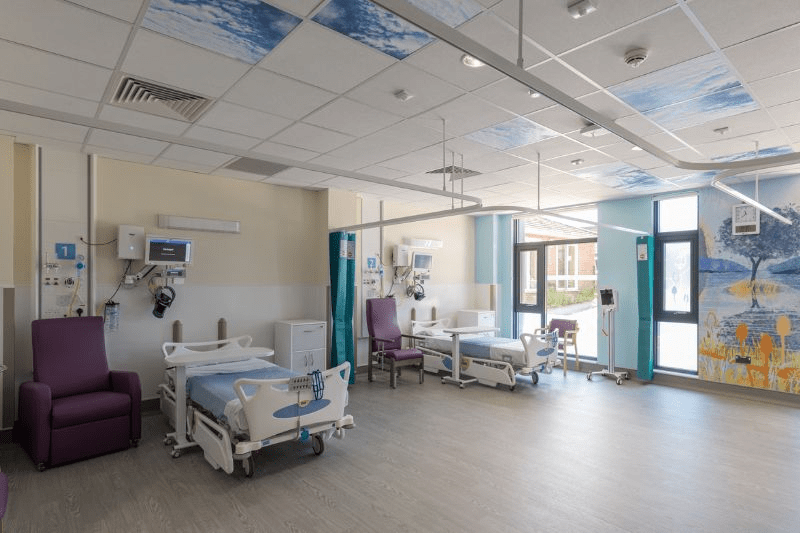
(Note: the hospital note ‘excerpts’ are fictional, though loosely related to my medical history)
Presenting Complaint
21-year-old female presenting with widespread joint pain, reported fatigue, and possible post-viral symptoms. Multiple prior admissions for unexplained symptoms. Patient appears anxious. History of suspected EDS and functional overlay. Further investigation not indicated at this time.
You don’t write that I had to crawl from the bedroom to the front door because I couldn’t stand upright. That I clung to the banister like it was a rope on the edge of a cliff. That the GP told me, again, it was probably stress.
You don’t mention the way I’d rehearsed my speech in the ambulance. “Don’t say you’re tired. Don’t say you’re scared. Say it hurts. Say you can’t walk. Say the fatigue is overwhelming. Say it like a symptom, not a feeling.” You don’t see the notes I wrote on mu phone because I was afraid I’d get flustered and forget.
You say I “appeared anxious.” As if that explains everything.
You don’t mention that I smiled to be taken seriously. That I didn’t cry because I knew tears are perceived as hysteria. That I lay on the hospital bed with my fists clenched under the blanket, whispering prayers to myself while a junior doctor asked if I might be exaggerating.
You didn’t see me pull on clean socks even though I couldn’t lift my legs. I didn’t want you to think I was dirty. You didn’t see the notebook where I tracked my pain every hour. The part of me still hoping I could prove it.
You wrote “further investigation not indicated.”
I called my mum in the waiting room, whispered, “They think I’m making it up again.” She said, “You’re still breathing. That’s what matters right now.”
That was the first night I started to believe I might survive this, even if the system didn’t believe me.
Mobility and Function
Uses wheelchair part-time. Patient encouraged to mobilise independently. No structural impairment observed. Advised that deconditioning may contribute to perceived mobility issues. Referral to physiotherapy provided.
Perceived mobility issues.
You watched me drag one leg behind the other and called it “perceived.” You watched me tip over sideways from standing and called it “anxiety.” You gave me physio exercises on a photocopied sheet and suggested I just needed to “rebuild confidence.”
You didn’t ask how it felt to move through a world that isn’t made for me. How I still take the longer route through town to avoid the hill, the stairs, the uneven curb. How I once sat outside a building at university in the pouring rain because there wasn’t a ramp out.
You called my wheelchair “part-time,” as if it’s a job I clock in and out of. As if that isn’t your language, not mine.
You didn’t notice how my shoulders dropped with relief when I finally sat in it. How it meant I could go to the shop again, to the library, to the park. How it gave me my body back. You didn’t hear the joy in my voice when I wheeled myself across the hospital car park for the first time in months.
You didn’t see the nurse who brought me a cup of tea and said, “Looks like you’ve done this before.” Like she saw me.
You didn’t write about the stranger in the corridor who told me, “You’re too young for that thing,” pointing to my chair. Or when I replied, “You’re too old to be that rude,” and rolled away smiling. You didn’t document the power I felt in that moment.
I didn’t lose mobility. I reclaimed freedom.
Nutrition and Feeding
Enteral nutrition via NG tube commenced. Patient demonstrated distress during insertion. Limited oral intake reported. Encouraged to increase hydration. Patient appears disengaged from treatment plan.
The first time they inserted the NG tube, I gagged so hard I bruised my own throat. The second time, I asked if I could hold someone’s hand. A junior doctor reached out wordlessly. You didn’t write about her.
You didn’t write about the tape rash on my face or how the pump beeped at 2am like a fire alarm. How I hated being tethered to a machine and loved it, too. It meant I didn’t have to explain, that my body was nourished. It meant I could rest.
You didn’t see me name the tube. Her name was Nelly. Because if I was going to let something live in my body, it might as well have a name.
You said I was disengaged. But I learned how to test the pH myself. I set up the feeds, monitored the pump, calculated the right overnight rate needed. I became a walking spreadsheet, ironic as walking wasn’t possible.
You never asked how it felt to be constantly fed but still hungry – for flavour, for choice, for something warm and familiar. You didn’t mention that I kept imagining my childhood favourite ‘tuna and rice’, picturing the way my mother always served it with a smile. How I wished I could just eat a normal meal but no longer had the energy.
You didn’t see the nurse who brought me stickers to decorate the pump, or the healthcare assistant who used to turn each feed bottle into a different smiley face each night. You didn’t talk about the friend who came to visit and made me laugh so hard until the tube kinked.
I was never disengaged. I was just exhausted. I am. But I am here.
Pain Management
Patient reports widespread pain, self-rated 9/10. No signs of acute distress observed. Request for opioid medication declined due to potential for dependency and possible drug-seeking behaviour. Advised to manage symptoms with paracetamol and CBT techniques.
No signs of acute distress.
I’ve lived in this body for 21 years. I know how to keep my face still when everything inside me is screaming. I know how to breathe through muscle spasms and dislocations and the grinding, electrical throb in my spine. I know how to speak softly so you’ll keep listening.
You don’t see the hours I spent curled around a hot water bottle, willing the pain to plateau. The pain that doesn’t come in spikes but waves – tidal, relentless, cruel.
You declined my medication request and suggested mindfulness. I said, “Do you want me to breathe my way out of a subluxed knee?” You smiled like I’d made a joke.
You didn’t see the nurse who whispered, “I believe you,” and slipped me a heat pack.
You didn’t write about the laughing fit I had with my sister when I was trying to get up the stairs and we both fell down laughing. Not because it didn’t hurt, but because it did – and laughter was the only way through it.
You didn’t see the wall I decorated with song lyrics and pain scale doodles, keeping them within arms-reach in case I needed to put a number to my pain, again. Or the fact that every day I wake up and try. No matter how shitty I feel.
Not because I’m brave. Because I have to.
Discharge Plan
Medically stable. Fit for discharge. Patient advised to follow up with community team and contact GP if symptoms worsen. No additional interventions recommended at this stage.
Medically stable. That was your way of saying, “We don’t know what else to do with you.” Because I certainly didn’t feel stable.
You didn’t mention the way my heart raced as I crossed the threshold. Not because I wasn’t glad to leave, but because I knew I’d be back. Because stable doesn’t mean safe. It doesn’t mean well.
You didn’t see the way I curled up in bed that night, every joint aching from the journey, every nerve on fire. But also: the softness of my own sheets. The cat who lay on my feet. The way I whispered to myself: I’m still here.
I wrote my own discharge note:
Survived. Scarred. Unseen – but still fighting.
All my love,
Anna x
 Mending the Broken