When Church Hurts

Todays post is a really tough, yet important topic: What happens when the church, a place that’s supposed to be safe and healing, becomes a source of hurt instead?

Church can be a complicated thing. Maybe you’ve been judged, dismissed, or hurt by people who were supposed to represent Christ. Maybe your struggles with mental health or chronic illness weren’t understood, or maybe you were given harmful advice like ‘just pray more’ or ‘you can’t have enough faith’. So, if you’ve ever felt hurt by the church, you are not alone.

I think one of the hardest things about being hurt by the church is that it feels so personal. The church isn’t just another institution – it’s supposed to be a family. It’s supposed to be a place where we find love, acceptance, and healing. So when hurt happens there, it cuts deep.

Perhaps you opened up about your mental health struggles, and instead of support, you were met with judgement or silence. Maybe you were told that your chronic illness was due to a lack of faith. Maybe leadership failed you in some way, or you witnessed hypocrisy that made you question everything. Whatever your experience, I want to say this: Your hurt is valid. Just because the pain came from people in the church doesn’t mean you have to dismiss it or pretend it hasn’t affected you.

And you’re not the only person who has felt this way. Even in the Bible, people wrestled with spiritual wounds. One example that stands out is Psalm 55:12-14 where David says:

“If an enemy were insulting me, I could endure it; if a foe were rising against me, I could hide. But it is you, a man like myself, my companion, my close friend, with whom I once enjoyed sweet fellowship at the house of God.”

David was betrayed by someone from within – someone he trusted and worshipped alongside. And that’s what makes church hurt so painful. It’s not a stranger wounding us; it’s someone we trusted.

Why Does Church Hurt Hit Hard?

When you’re hurt by someone in the church, it can shake your faith – not just in people, but in God Himself. It can make you wonder things like If this is what faith looks like, is it even something I want?

And that’s a valid question. So often, when we experience hurt in the church, we confuse the actions of people with the actions of God. It’s important to remember that God is not the same as the people who represent Him. Humans are flawed. They make mistakes. They get things wrong. But that doesn’t change who God is.

Even when we are hurt, God sees us. He isn’t like the people who hurt us. His love is pure and His heart is for healing – not for harm.

So, how do we move forward when we’ve been hurt by a place that is supposed to be safe?

  1. Acknowledge the hurt – It’s okay to say “This hurt me.” Sometimes, church culture teaches us to sweep things under the rug and pretend that we are fine. But denying the hurt that we have experienced, doesn’t make it go away.
  2. Separate God from people – People in the church get it wrong. That doesn’t mean that God got it wrong, though. It’s okay to wrestle with your faith after you have experienced hurt – but you should take this hurt to God. He can handle all of your questions, your doubts, your anger – and He encourages us to turn to Him.
  3. Find safe spaces – If your church environment feels harmful or unhealthy, it’s okay to step back. Sometimes wounds need distance to heal – there’s a saying that you can’t heal in the place that hurt you, and that’s ok. You can start by finding safe people where you can begin to process your experiences, and then go from there – maybe finding a new church environment when you feel ready for this.
  4. Remember Jesus’ heart – Jesus actually called out religious leaders when they misrepresented God. In Matthew 23, He rebukes the Pharisees for placing heavy burdens on people and not showing them mercy. If you have been hurt by the church know that Jesus is on your side.

God’s heart is for those who are hurting. In Psalm 34:18, it says:

“The Lord is close to the brokenhearted and saves those who are crushed in spirit.”

God is never far from you. He sees your pain. He cares about your wounds. He is always for you, even when people let you down.

All my love,

Anna x

Prayer vs Therapy: Do we need both?

The second post in this current series about faith and mental health is a topic that has been on my heart for a while: Do we need both prayer and therapy? It’s a question that many people struggle with when they have mental health difficulties. Do we rely on prayer to heal us or is it okay to seek professional help? Can the two of them work together in unison?

This is a question that others I know have asked many times – and, so have I. If you truly trust God, why would you need therapy? Or, shouldn’t prayer be enough to heal you? If you’ve ever had a moment where you’ve felt conflicted about seeking therapy or counselling, you’re not alone. There’s often a sense of guilt or confusion about whether seeking professional help means you lack faith or that God’s healing power isn’t enough.

First, let me say this: prayer is powerful. It’s a beautiful way to connect with God, to process our emotions, and to ask for healing. But prayer, while vital in our spiritual lives, doesn’t necessarily replace the need for therapy. And that’s okay. It’s okay to seek professional help while also trusting in God. It’s not either/or – it’s both/and.

Think about it this way: we wouldn’t hesitate to go to a doctor for a physical illness, right? If we broke a bone, we wouldn’t just pray and hope it heals on its own – we’d seek out the help of a medical professional. So, why should mental health be any different? Mental health issues are not a lack of faith or something to be ashamed of. Just as our bodies can experience sickness, our minds can experience pain, too. And it’s okay to seek help for that.

Let’s pause for a moment and reflect on what the Bible says about caring for ourselves.

1 Corinthians 6:19-20 says, “Do you not know that your bodies are temples of the Holy Spirit, who is in you, whom you have received from God? You are not your own; you were brought at a price. Therefore honour God with your bodies.”

This verse reminds us that we are entrusted with our whole selves – body, mind, and spirit – and it’s our responsibility to care for all aspects of ourselves. This includes our mental health. God doesn’t want us to neglect our minds or our emotional well-being.

So, what does it look like to blend prayer and therapy? Well, I think it starts with recognising that both are part of a holistic approach to healing. Prayer is a way we invite God into our struggles. It’s a place to find comfort, seek guidance, and receive peace. Therapy, on the other hand, is a way we partner with God by taking proactive steps to care for our mental health. It’s a place where we can gain tools and coping strategies, heal from past wounds, and understand ourselves better.

I’ve personally found that therapy and prayer work together – they don’t replace each other. For me, therapy has been a space where I can process difficult emotions and experiences in a structured, safe environment. And then, prayer has been the place where I find peace, where I process my feelings with God, and where I ask for strength to keep going.

A few years ago, I found a lovely private counsellor. I was struggling a lot with Anorexia at the time, and she specialised in eating disorders. From our first appointment, I knew that she was the right therapist for me. She was approachable, friendly and understanding and I felt like I could open up to her straight away. However, I knew that I couldn’t afford to see her for more than 15-20 sessions. So, I prayed. I prayed that God would provide, that it would work out and that I’d be in a financial position to see her for longer than 20 weeks. And the day after my second appointment, I got a letter saying that I had been awarded PIP (a benefit that can help toward the additional costs of living with a disability). This has now meant that I have been able to continue seeing my therapist for the last 4 years – therapy and prayer can work in conjunction with one another, and this is a prime example of that for me!

And here’s the thing: seeking therapy doesn’t mean you’re abandoning God. In fact, I believe that God uses therapy to help heal us in ways that prayer alone may not. God gave us the gift of wisdom and knowledge through professionals who are trained to help us navigate through mental health challenges. Just like God uses doctors, nurses, and medical professionals for our physical health, he can also use therapists, counsellors, and mental health professionals for our emotional and mental health.

I’ve also heard people say, “Well, if I go to therapy, I’m not trusting God enough.” But here’s what I think” trusting God IS part of seeking help. Trusting that God can work through therapy, that He can bring healing and transformation through the work of professionals, and trusting that He’s with us in the process of healing – whatever that might look like.

I also want to acknowledge that therapy can feel intimidating at first. It can be hard to know where to start, or what it will look like. But I want to encourage you to take the first step – whether it’s finding a counsellor or therapist, calling a helpline, or just talking to someone you trust about your struggles. You don’t have to walk through this alone.

Before I wrap this post up (it’s turned into much more of an essay than I thought it would – sorry!) let’s take a moment to reflect on another powerful verse that speaks to this topic. Philippians 4:6-7 says:

“Do not be anxious about anything, but in every situation, by prayer and petition, with thanksgiving, present your requests to God. And the peace of God, which transcends all understanding, will guard your hearts and your minds in Christ Jesus.”

Does this verse tell us to just pray and ignore our struggles? No. It says that we can pray and, in the process of prayer, God will give us peace – a peace that guards our hearts and minds. It’s not an instant fix, but it’s a process of bringing our anxieties before God and trusting that He will give us the peace we need in our hearts and minds.

So, the takeaway from this post is this: If you are struggling with your mental health, seeing therapy is not a sign of weak faith. It’s a way of honouring the body, mind, and spirit that God has entrusted to you. Prayer and therapy can go hand in hand. God’s healing power isn’t limited to one method, and He can use both prayer and therapy to bring you peace, healing, and wholeness.

All my love,

Anna x

The Role of Faith in Chronic Illness

If you’ve ever been diagnosed with a chronic illness, or if you’re walking with someone who is, you know how it can sometimes feel like a constant battle. And if you’re someone who has faith, it can raise some big questions. How does your faith play a role in navigating a chronic illness? Does faith mean healing? Or, is there something deeper at play?

Living with a chronic illness can be incredibly isolating. Whether it’s a physical illness, mental health challenge, or something else, the constant pain, fatigue, and uncertainty can weigh heavily on your soul. And if you’re someone who believes in God, you might find yourself asking questions like, “Why am I going through this?” or “Why hasn’t God healed me yet?”

When I was first diagnosed with my chronic illness, I had a lot of anger, confusion, and grief. I was angry at the illness. I was angry at my body for not cooperating. And I was frustrated with God, wondering why He hadn’t healed me. I think, for a lot of people, chronic illness brings up this question: If God is good, why do we have to suffer?

But over time, I’ve come to realise something really important: Faith in God doesn’t mean an absence of suffering. In fact, sometimes, our faith is tested and refined through our suffering. We live in a broken world, and while God can and does heal, He doesn’t always heal in the way we expect or on our timeline. And that’s okay. It doesn’t mean that God isn’t present or that He doesn’t care.

In Corinthians we see Paul talking about his own struggle with what he calls a “thorn in the flesh”. In chapter 12, verses 7-10 he says”

“Three times I pleaded with the Lord to take it away from me. But he said to me, “My grace is sufficient for you, for my power is made perfect in weakness. Therefore I will boast all the more gladly of my weaknesses, so that the power of Christ may rest upon me. For the sake of Christ, then, I am content with weaknesses, insults, hardships, persecutions, and calamities. For when I am weak, then I am strong.”

This passage is incredibly powerful because Paul doesn’t get the healing he asks for. Instead, he hears God say, “My grace is sufficient.” And in that, Paul finds peace – not in the healing itself, but in the sufficiency of God’s grace. That has been a game-changer for me!

When we live with a chronic illness, we might pray for healing, and often we don’t receive the answer we want. But I’ve come to believe that God’s grace is still enough. His presence is still with us, even in our pain. And sometimes, it’s through the weakness and suffering that we experience God’s power in a way that we wouldn’t otherwise. It’s not about denying the reality of the struggle – it’s about learning to rely on God’s strength when we don’t have any left.

But, I think it’s also important to acknowledge that this doesn’t make the pain any easier. Chronic illness is real. It’s relentless. And sometimes, it feels like an unfair burden. I think one of the hardest things to reconcile is the tension between wanting healing and having faith that God is with you even if healing doesn’t come in the way you expect.

An important lesson that I think we can all learn from is that faith doesn’t always look like immediate healing or answers – though it would be nice if it did! Sometimes, faith is about finding strength in the midst of the struggle. It’s about trusting that God is with us in our pain, that He holds us, and that He will never leave us. And I believe He can bring good even out of our suffering. That doesn’t mean the suffering is good – it just means that God can use our experiences to shape us, to teach us, and to help others.

So, whilst I believe that God can heal, I also believe that healing doesn’t always happen in the way we imagine. Sometimes healing looks like peace, or resilience, or learning to live with a new reality. And that’s where the role of faith comes in. Faith in chronic illness isn’t about waiting for a miracle. It’s about trusting that God’s presence in our lives is enough, no matter the circumstances.

In many ways, becoming chronically ill has deepened my relationship with God. It’s taught me how to lean on Him in ways that I never would have if everything had been easy – after all, if things had been easy then we would have no need for faith. I’ve learned that my weakness doesn’t disqualify me from God’s love. In fact, my weakness allows His strength to shine through. And that is a powerful thing.

If you’re living with a chronic illness right now, I want to say this: You are not alone. God sees you. He knows your pain. And he is with you, even when you feel weak or abandoned. Your illness doesn’t define you, and it doesn’t diminish your worth in God’s eyes. He is still good, and His love for you is unwavering.

Isaiah 41:10 says:

“So do not fear, for I am with you; do not be dismayed, for I am your God. I will strengthen you and help you; I will uphold you with my righteous right hand.”

Let this be a reminder that God is with you in your difficulties. He promises to strengthen you and uphold you, no matter what you are facing.

All my love,

Anna x

Can you be a Christian and struggle with mental health?

Before I dive into today’s post, I want to let you know that this blog is a safe space for anyone who is struggling or feeling isolated in their journey. Whether you’re dealing with mental health challenges, chronic illness, or just trying to navigate your faith in a difficult season of life, you’re not alone. This series is going to explore hard truths, share stories, and hopefully encourage you in a real, relatable way.

So, lets jump in!

It’s common in many faith communities to hear well-meaning phrases like, “If you just pray more, you’ll be healed,” or “Faith will fix this.” But, what happens when healing comes right away, or when the struggles feel too big for just prayer alone? Is there something wrong with your faith if you’re still battling anxiety, depression, or other mental health challenges?

I can’t speak for everyone, but I know I’ve struggled with this question. Growing up as a Christian, I have felt guilty for feeling anxious or depressed, as though it meant I wasn’t praying enough, or that somehow my relationship with God was lacking. But the truth is, struggling with mental health doesn’t mean we lack faith. Mental health issues don’t discriminate – they can affect anyone, no matter how strong their faith may be. It’s a misconception that if you’re truly trusting God, you won’t struggle with things like depression, anxiety, or even feeling overwhelmed by life. Struggling does not mean failing.

So, where does that leave us?

When we look at the Bible, we see that mental health struggles are acknowledged throughout Scripture. Even some of the greatest figures of faith faced dark, difficult times. The Psalms are full of David’s cries of despair – his deep sadness and his feelings of abandonment. Take Psalm 42, for example: “Why, my soul, are you downcast? Why so disturbed within me? Put your hope in God, for I will yet praise him, my Saviour and my God.”

David was honest with God about how he felt. And I believe God honoured that honesty. He doesn’t expect us to put on a mask and pretend that everything’s okay when it’s not.

And here’s the tricky part: many of us grow up with an idea that if we’re struggling, it’s because we’re not praying enough, or that God is punishing us for something. We see others who seem to have it all together – who are calm, confident, and free from anxiety – and we thing, “Well, what’s wrong with me?” And the guilt and shame can grow, making it even harder to seek help.

It’s that mindset that I want to challenge today. The truth is, just because we have faith doesn’t mean we won’t face challenges. Jesus himself said, “In this world you will have trouble. But take heart! I have overcome the world.” (John 16:33) That verse doesn’t say “If you have enough faith, you won’t face difficulty.” It says that, even in the midst of difficulty, we can take heart because Jesus has overcome it all. He’s with us in our pain, our struggles, and our doubts.

And that’s something that’s been something so powerful in my own journey: understanding that God is with me in the struggle. He doesn’t leave us when we’re struggling mentally or emotionally. I’ve learned that struggling with mental health doesn’t mean we’re failing God or our faith – it means we’re human. And God knows what it’s like to be human. He became human in Jesus, and he understands our pain in a way that no one else can.

I’ve also found it hard to accept that, just because I’ve had therapy and take medication, it doesn’t mean I’m not strong enough. But, faith is not about denying reality or pretending that everything is okay. Faith is about trusting God through the hard stuff – through the things we can’t fix on our own. Faith is not a magic fix for our pain; it’s a relationship with a God who holds us, even when we’re at our lowest.

If you’re struggling with mental health today – whether that’s anxiety, depression, stress, or anything else – I want you to hear this: It’s okay not to be okay. Your mental health is just as important as your physical health. And God sees you. He cares about what you’re going through. And he wants to help you through it.

Another scripture that has brought me so much comfort in times of struggle is Philippians 4:6-7. It says “Do not be anxious about anything, but in every situation, by prayer or petition, with thanksgiving, present your requests to God. And the peace of God, which transcends all understanding, will guard your hearts and minds in Christ Jesus.”

Now, I know that verses like this can sometimes feel like a ‘quick fix’ that doesn’t address the depth of what we’re going through. But I want to highlight that the peace of God doesn’t mean the absence of struggle. It means that, in the midst of struggle, God’s peace can still hold us. It’s not about getting rid of the anxiety or pain, but about experiencing peace through it.

So, my takeaway message if this: If you’re struggling with your mental health, it doesn’t mean that you’re weak in faith, and it doesn’t mean that you’re doing something wrong. In fact, it might mean that you’re being brave enough to face something difficult – and that’s something that God honours. Don’t let shame or guilt keep you from getting the help you need. Whether it’s therapy, medication, or a supportive community, there is no shame in seeking help. Faith is about trusting God in the journey, not denying that we’re needing help along the way.

So, as I finish, I want to encourage you to take a moment to reflect on how God might be inviting you to trust him with your mental health. What steps can you take to care for yourself, body, mind, and spirit? Maybe it’s something small, like acknowledging your struggles or reaching out for help.

All my love,

Anna x

Flowers Grow in the Valley

One of my favourite songs is called ‘Flowers’ by Samantha Ebert. It is a song that means an awful lot to me for a lot of reasons, but the main one is this: it is a song that God has used to show me his love and plan for my life on numerous occasions. Here is the story of the first time I listened to the song and how God spoke to me – for some context, this was during my admission to hospital last year whilst I was on the gastro ward just before my transfer back to my local psychiatric hospital.

The day before my transfer back to the psych ward, I had a visit from one of the hospital chaplains. She had visited me a few times during the seven weeks I was there and had always been kind to me, offering words of comfort and prayers during some of the hardest moments of my admission. That day, she told me about a song she had recently come across, one she thought I might like. “It’s called ‘Flowers’ by Samantha Ebert,” she said. “I really think you should listen to it.”

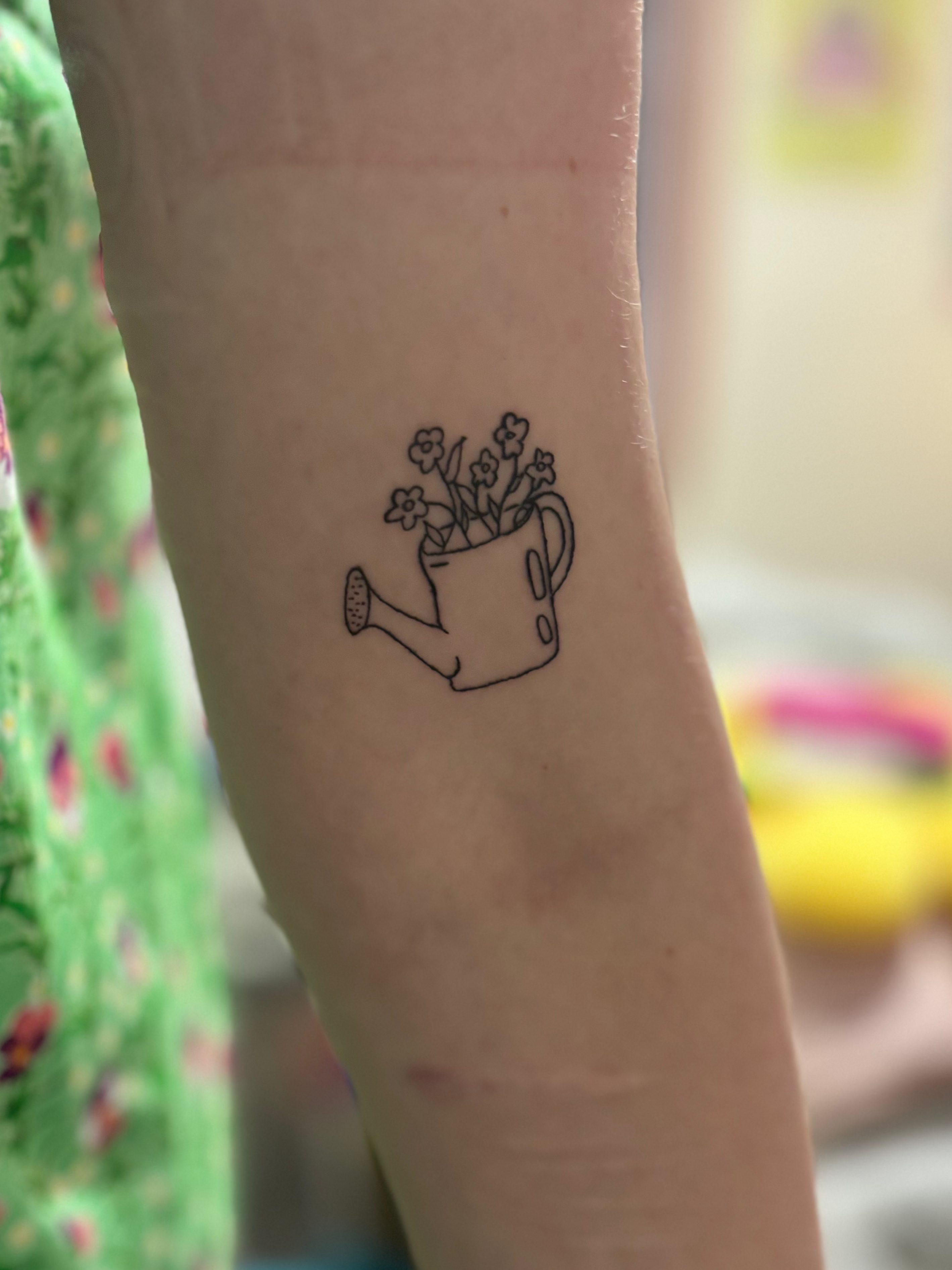
Later that evening, as I lay in my hospital bed, headphones in, I pressed play. The melody was soft, delicate, and the lyrics hit me in a way I hadn’t expected. “I’m a good God, and I have a good plan, so trust that I’m holding a watering can, ’cause flowers grow in the valley.”

Tears welled in my eyes as I listened. The words felt as if they had been written for me, a direct reminder that even in my lowest moments, God had not abandoned me. That He was still here, still holding me, even when I felt completely lost. I listened to the song on repeat until I fell asleep, letting those words seep into the cracks of my broken heart.

The following day, I was transferred back to the psych ward. It was an exhausting process, as hospital transfers always are. The endless waiting, the signing of forms, the final checks and cannula removals, before I was wheeled through the corridors, leaving behind the world of NG feeds and IV drips for another round of locked doors and psychiatric reviews.

I barely had time to settle back into my room before there was a knock at the door. It was one of the occupational therapists, someone I had always found easy to talk to. She smiled at me, holding out a small watering can and a packet of flower seeds. “You missed the group activity this morning,” she said. “We were planting flowers, but I thought maybe you’d like to do it with me now?”

I stared at her, my breath catching in my throat. A watering can. Flower seeds. Flowers grow in the valley. I felt my heart pound, an overwhelming sense of something greater than coincidence washing over me. I blinked back the tears threatening to spill over and nodded, unable to find the words to explain just how much this moment meant to me.

We sat on the floor of my room, scooping soil into small pots, carefully pressing seeds into the earth. As I watered them, I thought about how God had sent me a reminder in the most unexpected way – that I was still being nurtured, that even in this valley, something beautiful could grow.

I’ve included a link to the song here – I really recommend listening to it!

All my love,

Anna x

Myalgic Encephalomyelitis and me

My journey with Myalgic Encephalomyelitis (ME) is one that I could never have anticipated, and yet it has shaped my life in ways I am still trying to comprehend. It has been four years since I received the diagnosis, which, in the grand scheme of things, is not that long. But to me, it feels like a lifetime. A lifetime of limitations, of losses, of learning to navigate a world that no longer fits the way it once did.

Of all the chronic illnesses I have been diagnosed with, ME is the one I would get rid of in a heartbeat. It is cruel beyond belief. It strips away the ability to live life in any predictable or reliable way. There is no cure, no universally effective treatment – only management, and even that feels like a fragile balance. Some days, I can do more. Other days, even sitting up is too much. The unpredictability of it is one of the hardest things to live with. 

There have been times over the last four years where I have been completely bed-bound, unable to do anything but lie in the dark, too exhausted and in too much pain to even sit up. Those periods were terrifying, but I always held onto hope that I would find my way back to a more functional state. And, at times, it did. There were moments when I could leave my flat for short trips, where I felt like I was reclaiming slivers of my old life. But now, since sepsis, those moments are fewer and farther between.

I can now only leave my flat for essential appointments, the ones that must be attended in person. Anything that can be done from home, I do remotely. My world has shrunk in ways I never thought possible. I require a wheelchair to mobilise outside because my legs are too unstable to carry me for any meaningful distance. Inside my flat, I often rely on a walking stick to move between rooms. Even then, most of my day is spent in bed, waiting for the couple of ‘functional’ hours I am granted each day. Those brief windows of time where I feel somewhat capable of doing small tasks, of engaging with the world beyond my bed. 

One of the most distinct and cruel markers of ME is the way your body punishes you for overstepping its limits. When I push too hard, even slightly, I pay for it. The flares are brutal, and the warning signs are unmistakeable. When I have overdone it – whether that means sitting up too long, engaging in too much conversation, or even just focusing too hard on something – I feel it almost immediately. My legs burn as if they are on fire, a sensation so intense that it is impossible to ignore. It is my body’s way of screaming at me that I have no rested enough, that I have ignored its pleas for stillness.

The thing about ME is that it is not just about fatigue. That word does not do justice to the bone-deep exhaustion that no amount of sleep can fix. It is like being weighed down by an invisible force, making every movement feel like wading through cement. It is pain that radiates through my muscles and joints, an unrelenting ache that never truly disappears. It is cognitive dysfunction – brain fog so thick that I forget simple words mid-sentence, struggling to focus, and sometimes feel as though my mind has simply stopped working altogether. It is sensory overload, where lights are too bright, sounds are too loud, and even the touch of fabric on my skin can feel unbearable.

Since sepsis, my body has become even more fragile. I used to have at least a little energy to ration throughout the day, but now, every action comes with a cost. The simplest tasks – brushing my teeth, getting dressed, making a cup of tea – feel monumental. I have to think about every movement, weigh whether it is worth the energy expenditure, knowing that if I push too far, I could be bedridden for days. My life has become a delicate balancing act between doing too much and not doing enough.

Sleep offers no relief. No matter how many hours I spend resting, I wake up just as drained as before. And even on nights where exhaustion consumes me, sleep doesn’t always come easily. The pain, the discomfort, the sheer weight of my body’s brokenness keeps me tossing and turning, desperate for rest that never truly arrives. When I do sleep, I wake up feeling like I have run a marathon in my dreams, my muscles aching as if I had been fighting through the night. 

The isolation that comes with ME is another layer of cruelty. I have lost the ability to maintain relationships the way I once could. I miss out on gatherings, on conversations, on simply being able to exist in the world in a way that feels normal. Friends and family understand to an extent, but unless someone has lived through it, they can never fully understand. My dad was actually diagnosed with ME when I was a baby and, though he doesn’t struggle any more, it means that my family have a very good understanding of my day-to-day life.

I miss spontaneity. I miss being able to say yes to things without immediately calculating the toll it will take on my body. I do not know what the future holds for me in terms of ME. It is scary waking up each day, not knowing how the day will go, what your body will cope with. And it is terrifying when you experience a decline – is this what is going to tip your body over the edge? Is it just a temporary flare, something that’s going to stick around for a long time, or, god-forbid, be permanent? 

What I do know is that, since sepsis, things have been worse than ever before. I have lost more than I ever thought I could, and I am still trying to come to terms with that. But I have also learned resilience in a way that few people understand. I have learned to exist within my limitations, to navigate a life that looks nothing like the one I imagined. And, most of all, I have learned that survival is not just about living – it is about adapting, about finding ways to exist within the cracks of what was lost, about holding onto hope even when it feels like everything is slipping away. 

My next post is going to talk about what people with ME want you to know, as well as exploring some of the ways other people with the condition describe it to others.

Until then,

All my love,

Anna x